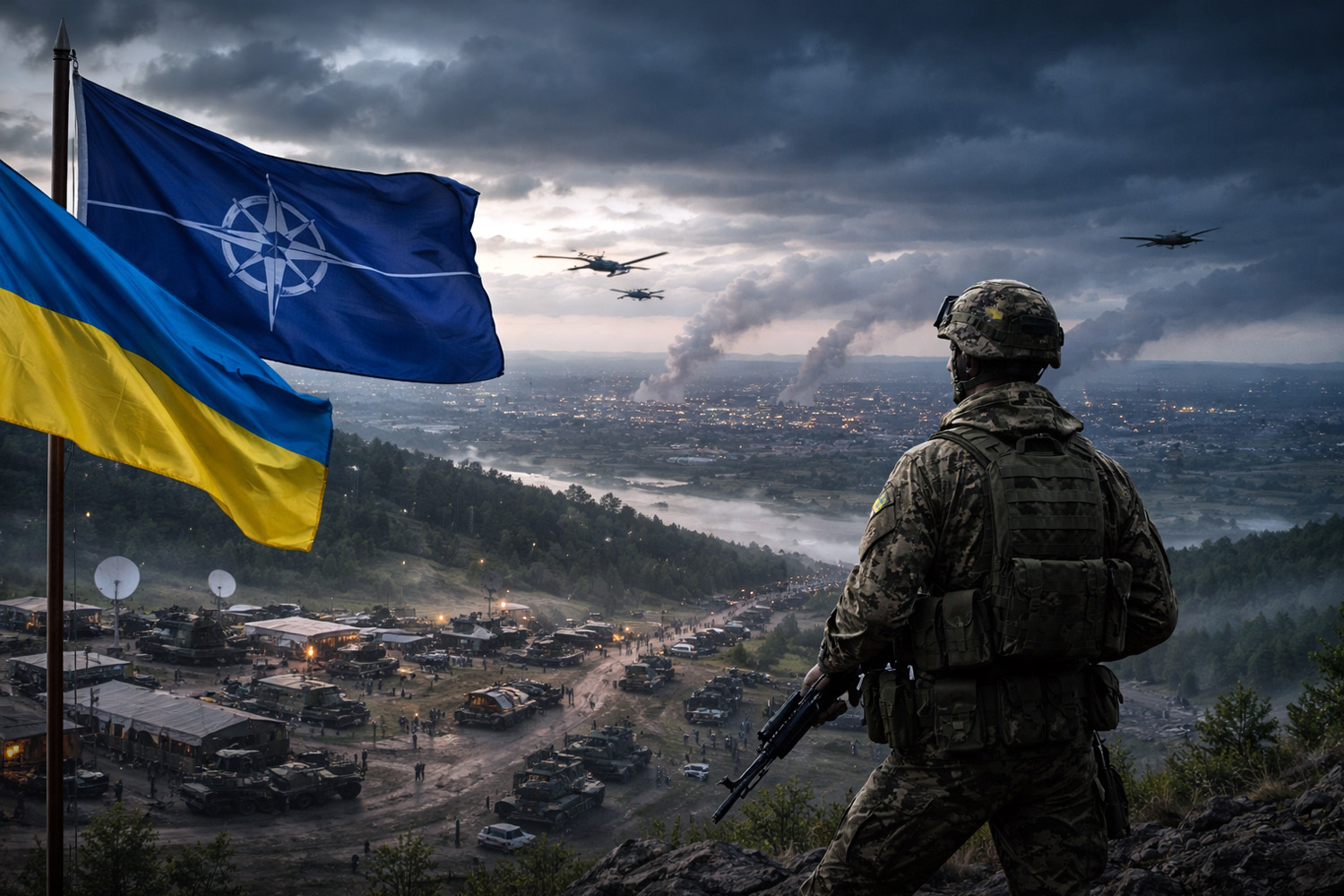
Does NATO Need Ukraine — Or Does Ukraine Need NATO?
Recent debates about the future of Euro-Atlantic security have raised a provocative question: Is Ukraine indispensable to NATO’s strategic relevance — or is NATO essential for Ukraine’s defense?
While dramatic anecdotes have circulated on social media about military exercises and battlefield technologies, a grounded look at the facts shows a more nuanced reality about alliance capabilities, interoperability, and modern warfare demands.
Modern Warfare is Changing — and So Must NATO
Global security analysts and military experts widely agree that conflicts in the 21st century — particularly the Russian invasion of Ukraine — have underscored the importance of networked intelligence, unmanned systems and rapid decision cycles. The war in Ukraine has accelerated innovation in drone use, electronic warfare, and battlefield data integration. These developments have influenced Western militaries, including NATO members, to reassess doctrine and force structure.
Large-scale NATO exercises such as DEFENDER-Europe and Steadfast Defender routinely test alliance readiness across multiple domains. Those exercises often include participation from partner nations and observers, and they are intended to evaluate the alliance’s ability to operate together, not to replicate any single real-world conflict. They also increasingly incorporate lessons learned from Ukraine about dispersed operations and decentralized command.
Interdependence, Not Replacement
Ukraine and NATO are linked by a strategic interdependence born of circumstance. Ukraine’s military innovation and battlefield experience have provided valuable insights into the challenges of modern, high-intensity warfare. Western militaries have incorporated these lessons, particularly regarding the use of unmanned aerial systems and real-time battlefield awareness. However, there is no credible evidence that NATO forces in structured exercises are “defeated” by small units in simulation to the point of strategic failure — especially within official NATO reporting. If such claims circulate without independent verification from credible defense analysts or official assessments, they should be treated with caution.
What is widely accepted is that no major military alliance is immune to challenges posed by rapid technological change. NATO’s own transformation efforts, including the Connected Forces Initiative and enhanced forward presence in Eastern Europe, reflect a recognition that integration of intelligence, surveillance, and reconnaissance (ISR) technologies is crucial for future deterrence.
Why It Matters
For Ukraine, security guarantees and military assistance from NATO member states have been vital in resisting aggression and sustaining long-term defense efforts. For NATO, Ukraine’s resistance has highlighted the need to adapt to hybrid and high-intensity warfare dynamics and has reinforced political unity among many member states. The relationship is not one of simple dependency but of mutual strategic learning.
Trend impact
The future of NATO and Ukraine’s defense planning will be shaped by how effectively alliance members integrate cutting-edge technologies, reform force structures, and maintain political cohesion. The war in Ukraine has accelerated conversations around AI in command systems, autonomous drones, and logistics automation — areas where both NATO and Kyiv have real-world incentives to innovate. This evolving landscape suggests that the alliance’s relevance will increasingly be tied to its ability to anticipate change rather than replicate Cold War paradigms.