Trump’s “Taxpayer Protection Oath”: Energy, AI and the New Infrastructure Politics
Strategic Context
The rapid expansion of artificial intelligence and cloud computing has transformed data centers into one of the most strategically important layers of modern economies. Hyperscale facilities operated by companies such as Amazon, Google, Meta, Microsoft, OpenAI, Oracle and xAI now anchor global AI development.
These facilities require large and reliable electricity supply. As AI workloads intensify, energy demand from data centers is rising, prompting debates about grid capacity, ratepayer impacts, and infrastructure financing. Policymakers are increasingly confronted with a structural question: how to enable AI-driven growth without shifting infrastructure costs onto households and small businesses.
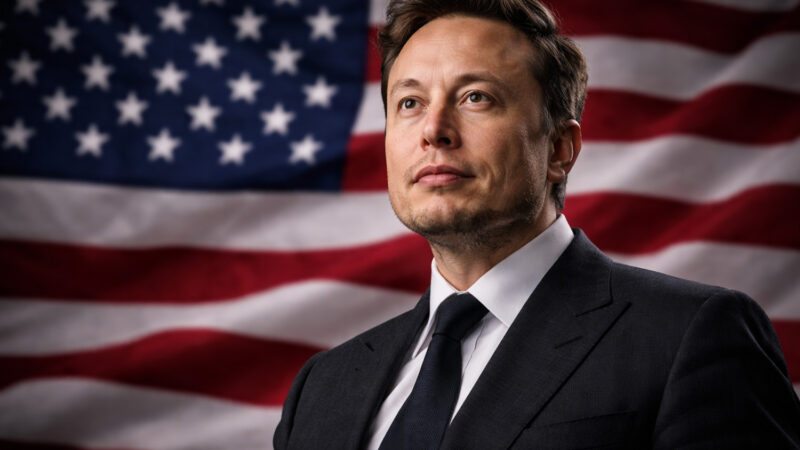
In this context, U.S. President Donald Trump introduced a new initiative — the “Taxpayer Protection Oath” — positioning energy as the central constraint in the next phase of digital expansion.
What Happened
In a speech to Congress, President Trump announced that major technology companies would be required to provide their own electricity for data centers in order to avoid increasing consumer utility bills. The White House stated that leading technology firms are expected to attend a March meeting in Washington to discuss the proposal.
At this stage, the initiative remains conceptual. No detailed legislative or regulatory framework has been released. However, the framing itself is significant: it signals a potential policy shift toward requiring hyperscale technology operators to internalize more of the infrastructure costs associated with their expansion.
Why It Matters
Energy as the Bottleneck of AI
Artificial intelligence is increasingly constrained not by algorithms, but by compute capacity — and compute capacity is constrained by electricity. Large AI data centers operate at massive scale, requiring continuous and stable power supply.
Requiring companies to self-generate electricity would fundamentally alter the cost structure of AI deployment. It reframes AI competition as not only a software race, but also an energy race. Access to reliable, scalable, and affordable power becomes a strategic advantage.
Redefining the Tech–Utility Relationship
Traditionally, electric utilities spread infrastructure costs across ratepayers. When large industrial consumers connect to the grid, new generation or transmission capacity may be needed. Depending on regulatory frameworks, some of these costs can affect consumer rates.
The proposed oath signals a political recalibration: hyperscale data center operators may be expected to finance dedicated generation capacity rather than rely on publicly expanded grid systems. This approach treats large tech firms more like heavy industry with bespoke infrastructure requirements.
If implemented, it could accelerate trends toward:
- Behind-the-meter generation
- Long-term private power purchase agreements
- On-site renewable or gas generation
- Microgrid development
This represents a structural shift in how digital infrastructure integrates with national energy systems.
Political Economy of AI
AI development is capital-intensive and increasingly concentrated among a small number of companies. As their energy footprints grow, so does public scrutiny.
Framing the initiative as “taxpayer protection” positions energy consumption by AI firms as a consumer issue, not merely an industrial one. This broadens the regulatory narrative beyond antitrust or data privacy and into household economics.
In political terms, it redefines Big Tech not just as market actors, but as major infrastructure consumers whose actions have systemic cost implications.
Market / Financial / Sector Impact
Capital Allocation Shifts
If self-generation becomes mandatory or strongly incentivized, major technology firms would likely expand direct investment in energy assets. This could include:
- Natural gas–fired generation for reliability
- Renewable energy projects
- Battery storage systems
- Partnerships in advanced nuclear technologies
Technology companies already engage in long-term energy contracting. However, moving toward full or partial self-generation would represent deeper vertical integration.
Utilities and Power Producers
Traditional utilities could face mixed effects. On one hand, reduced dependence on grid-supplied electricity from hyperscalers could limit projected load growth. On the other, independent power producers and energy developers might benefit from long-term contracts tied to co-located data centers.
The shift could also reshape financing structures for new power plants, with technology firms becoming anchor customers or co-investors.
Impact on Cost Structures
From a financial perspective, the key question is whether additional infrastructure obligations materially increase operating costs. Large incumbents such as Amazon, Google, and Microsoft possess balance sheet strength to absorb capital expenditure. Smaller AI-focused firms may face higher relative barriers.
Thus, compliance requirements could reinforce scale advantages rather than reduce concentration.
Competitive Landscape
Scale as Strategic Protection
The largest cloud providers already operate complex global infrastructure portfolios. If energy self-provision becomes a requirement, firms with established procurement expertise and capital access will adapt more easily.
This dynamic may increase entry barriers in AI infrastructure markets, consolidating dominance among existing hyperscalers.
Geographic Competition
Regions with favorable permitting regimes, abundant land, and flexible energy policy may attract greater data center investment. States capable of supporting co-located generation assets could gain competitive advantage.
Internationally, countries that can combine reliable grid capacity with supportive regulatory frameworks may strengthen their positions in the AI infrastructure race.
Risks & Uncertainties
Lack of Policy Detail
The proposal has not yet been formalized in legislation. Critical unknowns include:
- Whether self-generation would be mandatory or voluntary
- How partial grid reliance would be treated
- What energy sources would qualify
- How compliance would be monitored
Until regulatory clarity emerges, firms face planning uncertainty.
Regulatory Complexity
Energy regulation in the United States involves federal and state authorities. Implementing nationwide requirements for private generation could trigger jurisdictional conflicts or legal challenges.
Grid Reliability and Coordination
Large-scale behind-the-meter generation may complicate grid planning. If hyperscale facilities operate semi-independently from centralized grid coordination, reliability modeling could become more complex.
Environmental Trade-offs
If companies prioritize reliability and speed, they may opt for fossil-fuel-based generation. Conversely, renewable-heavy solutions introduce intermittency and storage considerations. The environmental trajectory would depend on implementation specifics.
Bigger Trend Implications
AI as Physical Infrastructure
The initiative reinforces a broader reality: AI is physical. Its growth depends on electricity, land, water, and transmission lines. Policymaking is shifting to reflect that AI infrastructure has tangible economic and social externalities.
Digital dominance is increasingly inseparable from energy capacity.
Convergence of Tech and Energy
As data center power demand grows, the boundary between technology companies and energy companies is narrowing. Technology firms are becoming large-scale energy market participants. Policies that encourage or require self-generation accelerate this convergence.
Over time, this could lead to deeper vertical integration and hybrid energy-technology investment models.
Consumer-Centric Tech Regulation
Unlike traditional regulatory approaches focused on competition or content moderation, the “Taxpayer Protection Oath” frames technology regulation through consumer cost protection. This expands the scope of policy tools applied to Big Tech.
Future debates may extend to other resource impacts, including water usage and land allocation.
Global Policy Signaling
Other jurisdictions grappling with data center-driven grid stress may monitor U.S. policy direction. If structured self-generation requirements are implemented, similar measures could emerge internationally.
Such diffusion would reshape global AI infrastructure investment patterns and potentially slow expansion in regions where private generation is costlier.
Conclusion
President Trump’s proposed “Taxpayer Protection Oath” marks a significant moment in the evolution of AI-era infrastructure policy. While still conceptual, it highlights a structural tension at the heart of digital expansion: the growing energy demands of hyperscale computing and their interaction with public utility systems.
The initiative suggests a recalibration of responsibility, positioning major technology firms as direct infrastructure providers rather than purely grid-dependent consumers. Whether implemented in strict or modified form, the proposal underscores a strategic shift: the future of AI competitiveness will be shaped as much by energy capacity and infrastructure finance as by algorithms and software innovation.
In the emerging era of compute-intensive growth, kilowatts may become as geopolitically significant as code.