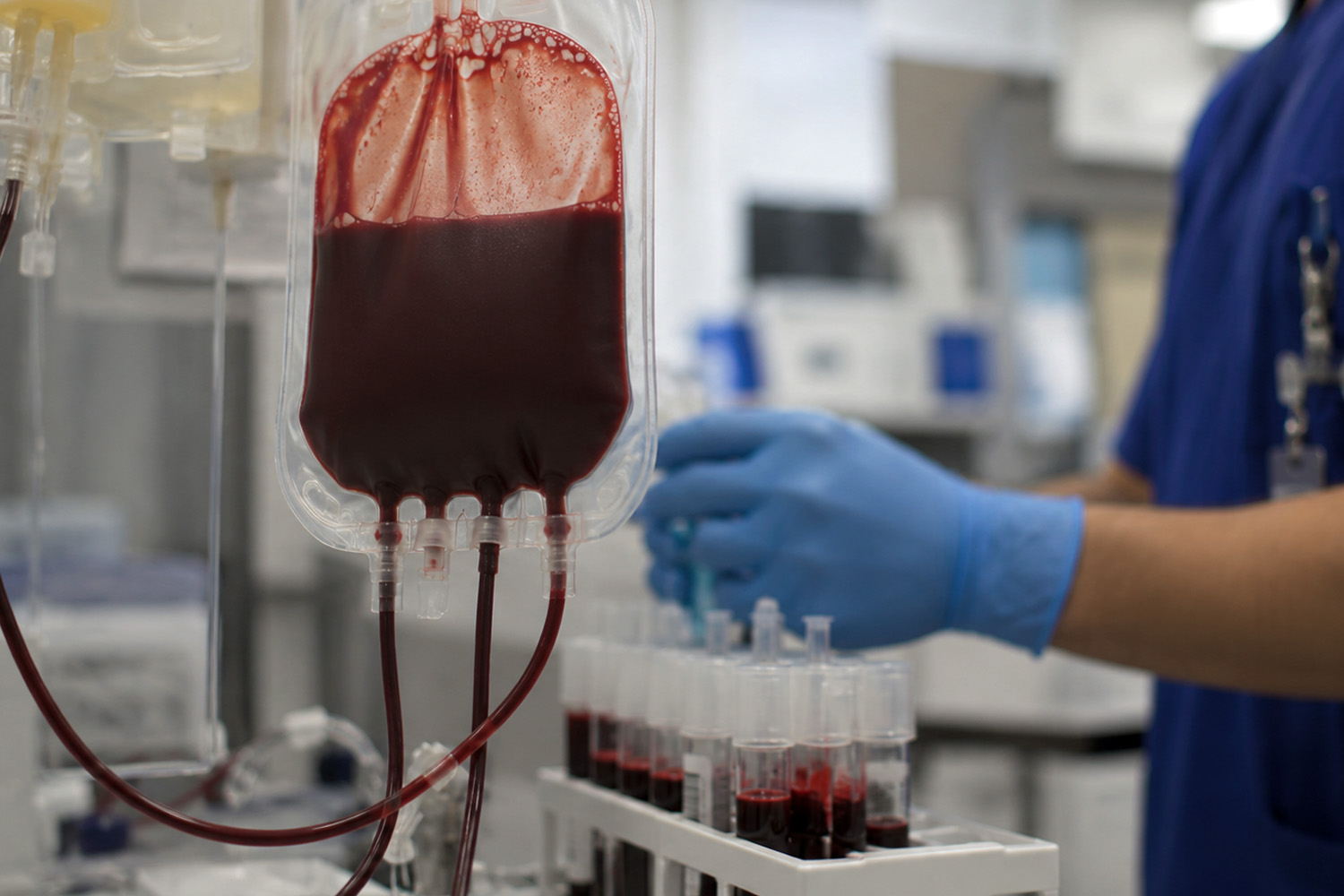
Blood transfusion is one of modern medicine’s most important yet fragile systems. Every day, hospitals depend on donated blood to support surgeries, trauma care, cancer treatment, childbirth complications, and chronic illnesses. Yet despite its critical role, blood remains uniquely difficult to replace. It expires, requires careful matching between donors and recipients, and depends entirely on voluntary human donation.
This vulnerability has intensified global interest in alternatives to traditional transfusion. Researchers, governments, and healthcare systems are investigating whether artificial blood products, laboratory-grown cells, and improved transfusion strategies could reduce pressure on donation systems and improve patient outcomes.
However, the idea of “artificial blood” often exists in public imagination far ahead of medical reality. Science fiction frequently portrays synthetic blood as a universal replacement ready for emergency use, but verified evidence presents a more complex picture. While meaningful progress has emerged, no fully functional replacement for human blood currently exists in routine clinical practice.
The future of transfusion medicine is therefore not simply about inventing artificial blood. It is increasingly about combining biotechnology, smarter medical practices, and public health adaptation to make blood systems more resilient.
Why Traditional Blood Systems Are Under Pressure
The renewed interest in transfusion alternatives is driven by practical healthcare challenges rather than scientific curiosity alone.
Blood donation systems face persistent pressure in many countries. Donated blood has a limited shelf life: red blood cells can generally be stored for only several weeks, while platelets expire within days. Supply shortages can emerge quickly due to disasters, disease outbreaks, seasonal declines in donation, or demographic shifts.
Population aging also plays an important role. Older populations tend to require more surgeries, cancer treatments, and chronic disease care, increasing demand for blood products. At the same time, many countries report declining donation rates among younger generations.
The COVID-19 pandemic highlighted this vulnerability. Healthcare systems experienced disruptions in blood collection while simultaneously confronting increased medical strain. Although systems largely adapted, the experience reinforced concerns about overdependence on donated blood.
From a public health perspective, this challenge is not only logistical-it reflects broader societal shifts. Changing lifestyles, reduced civic participation in some regions, and competing demands on people’s time may affect donation behavior. Maintaining stable blood supplies increasingly requires public trust, institutional organization, and long-term engagement strategies.
These pressures help explain why medical research into transfusion alternatives has accelerated.
What “Artificial Blood” Actually Means
One major misunderstanding surrounding artificial blood is the assumption that researchers are attempting to recreate all functions of blood at once.
Human blood performs many tasks simultaneously: transporting oxygen, regulating immunity, clotting wounds, and maintaining fluid balance. Replacing every function artificially remains far beyond current medical capability.
Instead, researchers generally focus on specific components-especially oxygen transport.
Two major categories of blood substitutes have historically dominated research:
Hemoglobin-Based Oxygen Carriers (HBOCs)
These products attempt to use purified hemoglobin-the oxygen-carrying protein in red blood cells-to transport oxygen without requiring full donor blood.
Researchers have explored modified human, bovine, and recombinant hemoglobin formulations designed to improve oxygen delivery during trauma or severe blood loss.
The appeal is obvious. Such products could potentially avoid blood-type matching, remain stable longer than donor blood, and prove useful in emergencies or remote environments.
Yet clinical progress has been slow.
Several experimental products encountered safety concerns, including cardiovascular complications linked to blood vessel constriction and inflammatory effects. While some products have been tested in limited contexts or approved in certain countries for restricted use, no widely accepted universal HBOC has replaced standard transfusions.
The lesson from decades of research is important: biological systems are more difficult to replicate than early optimism suggested.
Perfluorocarbon-Based Oxygen Carriers (PFCs)
Another area of research uses synthetic compounds capable of dissolving oxygen.
These formulations attracted attention because they could theoretically transport oxygen without relying on blood cells. However, technical limitations and mixed clinical outcomes have restricted adoption.
Although scientific interest continues in highly specialized applications, these products have not become mainstream transfusion alternatives.
In practical terms, artificial blood remains an active research field rather than a completed medical breakthrough.
The Rise of Lab-Grown Blood Cells
If fully synthetic blood remains elusive, laboratory-grown blood cells may represent a more realistic near-term development.
Researchers have successfully produced red blood cells from stem cells in laboratory environments. Early clinical studies have explored whether cultured red blood cells can safely circulate in humans.
The primary motivation is not necessarily replacing all donated blood but solving highly specific medical challenges.
Certain patients with rare blood types struggle to find compatible donors. Others develop antibodies after repeated transfusions, making matching increasingly difficult. Laboratory-grown cells could eventually provide more precise compatibility for these populations.
Researchers also hope cultured cells may remain in circulation longer than donated red blood cells, potentially reducing transfusion frequency in some cases.
However, important limitations remain.
Manufacturing blood at scale is extremely expensive and technologically demanding. Producing enough laboratory-grown blood for widespread hospital use remains economically unrealistic today.
As a result, experts generally view lab-grown blood not as a mass replacement for donors, but as a targeted tool for specialized medical situations in the foreseeable future.
This distinction matters because public expectations often overestimate how quickly experimental technologies become practical healthcare solutions.
Smarter Transfusion Practices May Matter More
Ironically, one of the most important “alternatives” to transfusion may not involve artificial blood at all.
A growing healthcare trend known as patient blood management (PBM) focuses on reducing unnecessary transfusions through evidence-based medical practices.
Rather than treating transfusion as the default response, clinicians increasingly emphasize preventing avoidable blood loss, identifying anemia earlier, optimizing surgical techniques, and using blood products more precisely.
Research shows that over-transfusion can sometimes expose patients to avoidable risks without improving outcomes. As a result, many hospitals now apply stricter criteria for when blood is truly necessary.
This shift reflects a broader evolution in medicine: healthcare systems increasingly prioritize precision and resource stewardship rather than maximal intervention.
In public health terms, PBM represents an important behavioral change within healthcare itself. Better management may reduce strain on blood systems even before technological alternatives mature.
In some ways, improving how existing blood is used could have greater short-term impact than futuristic inventions.
What Lifestyle and Social Trends Mean for Blood Systems
The future of transfusion medicine is also shaped by broader societal behavior.
Public willingness to donate blood remains essential, yet healthcare systems increasingly compete for people’s time and attention. Younger generations often engage differently with civic participation than previous generations, requiring new approaches to donor recruitment.
Digital communication now plays a larger role. Mobile alerts, social media campaigns, and targeted outreach increasingly influence donor behavior, especially during shortages.
Health awareness trends may also influence participation. People who view donation as part of community wellbeing or preventive health culture may be more likely to participate consistently.
At the same time, misinformation remains a challenge. Public misunderstandings about safety, eligibility, or medical risks can discourage participation despite strong scientific evidence supporting donation safety for eligible individuals.
This means the future of blood systems will depend not only on laboratories, but also on trust and public engagement.
What the Future Realistically Looks Like
Evidence suggests that the future of transfusion medicine is unlikely to involve one dramatic breakthrough replacing donated blood entirely.
Instead, experts increasingly anticipate a layered system:
- Traditional blood donation remaining essential for most healthcare needs
- Lab-grown blood supporting rare or complex transfusion cases
- Improved blood substitutes for limited emergency or battlefield applications
- Better patient blood management reducing unnecessary demand
- Advanced matching and storage technologies improving efficiency
This gradual evolution aligns with how medicine usually advances. Revolutionary headlines often attract attention, but healthcare progress typically emerges through incremental improvements supported by clinical evidence.
The future of artificial blood therefore appears less like science fiction and more like healthcare adaptation.
Conclusion: The Real Innovation May Be Resilience
The story of artificial blood is ultimately about resilience rather than replacement.
Modern medicine depends heavily on donated blood, yet growing demand, aging populations, and logistical vulnerabilities are pushing healthcare systems to rethink how transfusions work.
Evidence-based research suggests meaningful progress is happening, particularly in laboratory-grown cells and targeted oxygen-carrying technologies. But the most important lesson is that no single technology currently offers a universal substitute for human blood.
Instead, the future will likely combine innovation with smarter medical practice and stronger public participation.
In that sense, the real breakthrough may not be artificial blood itself, but the creation of a transfusion system flexible enough to meet growing healthcare demands while remaining safe, efficient, and equitable.