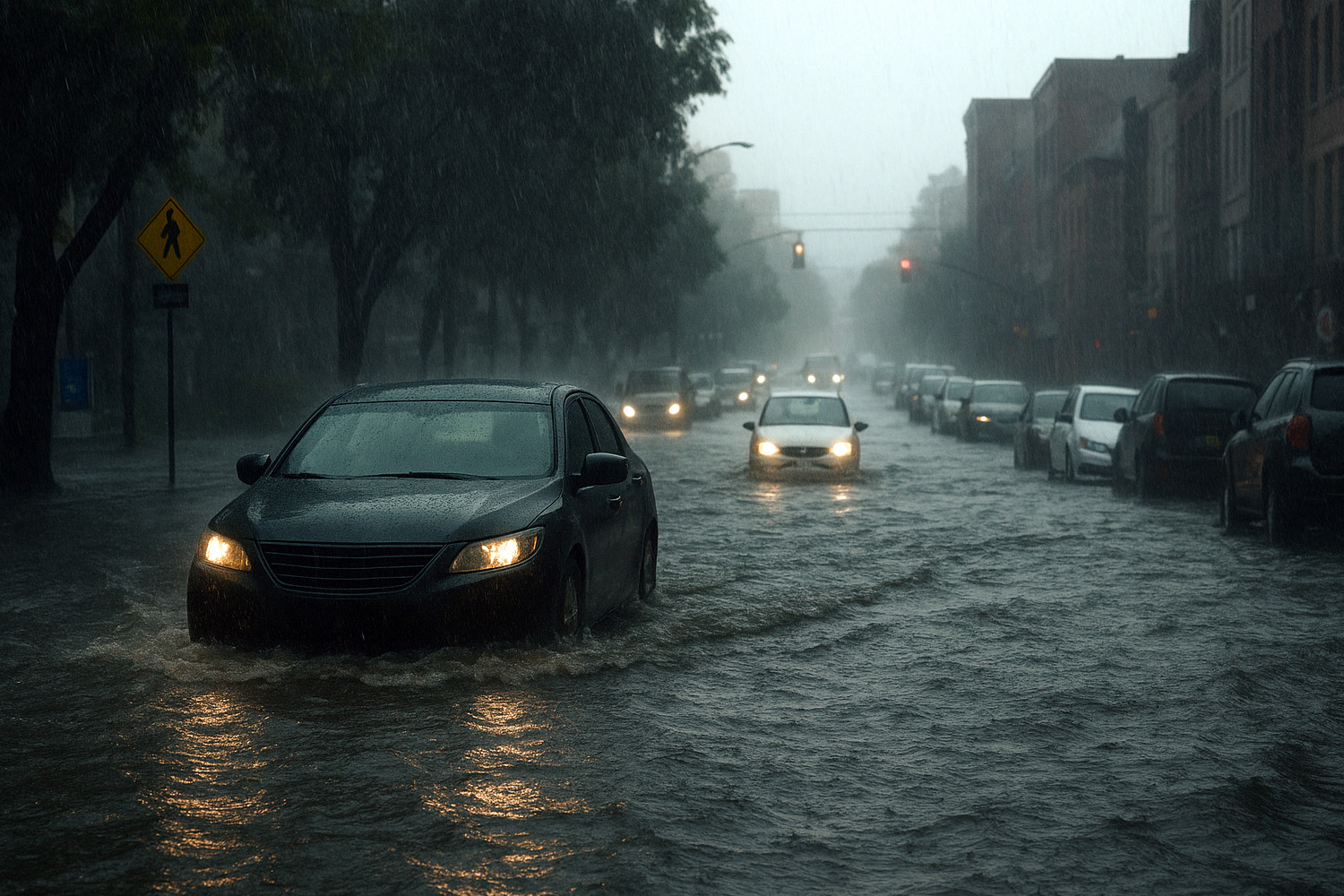
Around the globe in 2025, communities are facing increasing floods and unprecedented rainfall events — from Europe’s widespread river floods in 2024 to flash flooding in Pakistan, Nigeria and Asia — and scientists attribute much of the surge to climate change. Multiple studies now show that warmer temperatures allow the atmosphere to hold more water vapour, which in turn fuels heavier, more intense rainfall and flooding events.
Why are rainfalls getting more extreme?
- A German-Austrian research team found short-duration rainfall events (over a few hours) are especially impacted by rising global temperatures — the thermodynamics of warming amplify how hard and fast rain can fall.
- The 2025 Global Assessment Report shows that flood-related disasters have risen dramatically: since 1985, flood events have increased over 130 % compared to earlier decades, underlining the growing risk.
- In Europe, a joint 2025 report from the Copernicus Climate Change Service and the World Meteorological Organization found that in 2024 nearly 30% of the continent’s river network was impacted by floods. The region suffered its most widespread floods since 2013, with at least 335 fatalities and more than €18 billion in economic damage.
Flooding hotspots in 2025
- Pakistan (June-September 2025): Intense monsoon and glacial-melt driven floods hit multiple provinces, displacing millions and overwhelming infrastructure.
- Northern Nigeria (May 2025): Pre-dawn heavy rainfall triggered destructive floods in Mokwa, leaving over 110 people dead and vast neighbourhoods submerged.
- Australia – New South Wales (May 2025): A climatological study found rainfall totals were up to 15% higher than past averages in the region, reflecting the role of climate change in intensifying rainfall.
- Hong Kong (July–August 2025): Four “black rainstorm” episodes in eight days broke previous records, showcasing how even developed, well-infrastructured cities face amplified extreme-rain risk.
What are the implications?
- Infrastructure stress: Drainage, storm-water systems and flood defences built to historical norms are increasingly inadequate in the face of heavier downpours and faster accumulation of water.
- Increased human cost: Rapid flooding leaves less time for warnings and evacuations, making the events more dangerous — especially in urban and vulnerable rural areas.
- Economic burden: One estimate places the annual global average loss from river-overflow floods at nearly USD 388 billion.
- Climate-adaptation urgency: Researchers emphasise that societies must invest in planning, infrastructure, warning systems and resilient land-use policies now, because more frequent and intense rainfall extremes are no longer just a future threat — they are unfolding today.
What can be done?
- Upgrade urban drainage and flood defences to cope with higher-intensity storms and faster runoff.
- Restore natural sponges such as wetlands and forests, which absorb excess rainfall and slow flood-waters.
- Implement stronger early-warning systems and land-use planning that avoids building in high-flood-risk zones.
- Integrate climate-risk modelling into infrastructure planning — using latest science to design for future rainfall, not past averages.
- Promote community resilience and awareness, especially in regions where floods strike fast and evacuation windows are narrow.
In summary: The era of “once-in-a-century” rainstorms is ending. As global temperatures climb, the atmosphere’s capacity to hold moisture rises, and when storms unleash, the deluge is heavier, the danger greater and the damage more severe. Understanding how climate change drives record rainfall and floods is critical — but responding with better infrastructure, policy and preparedness is just as urgent.