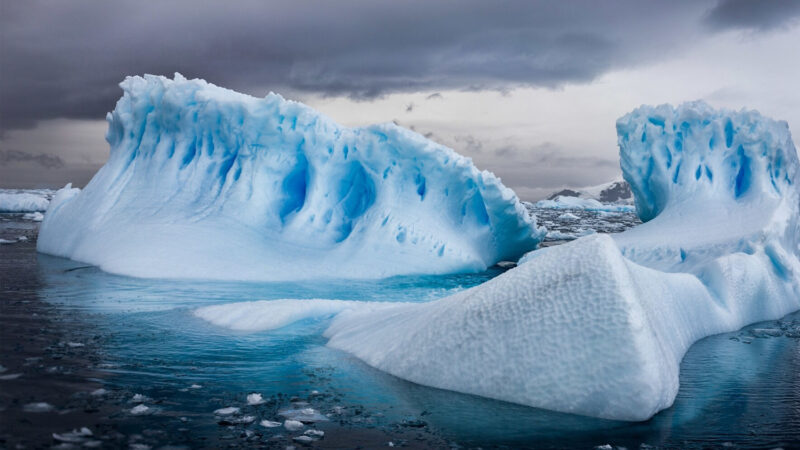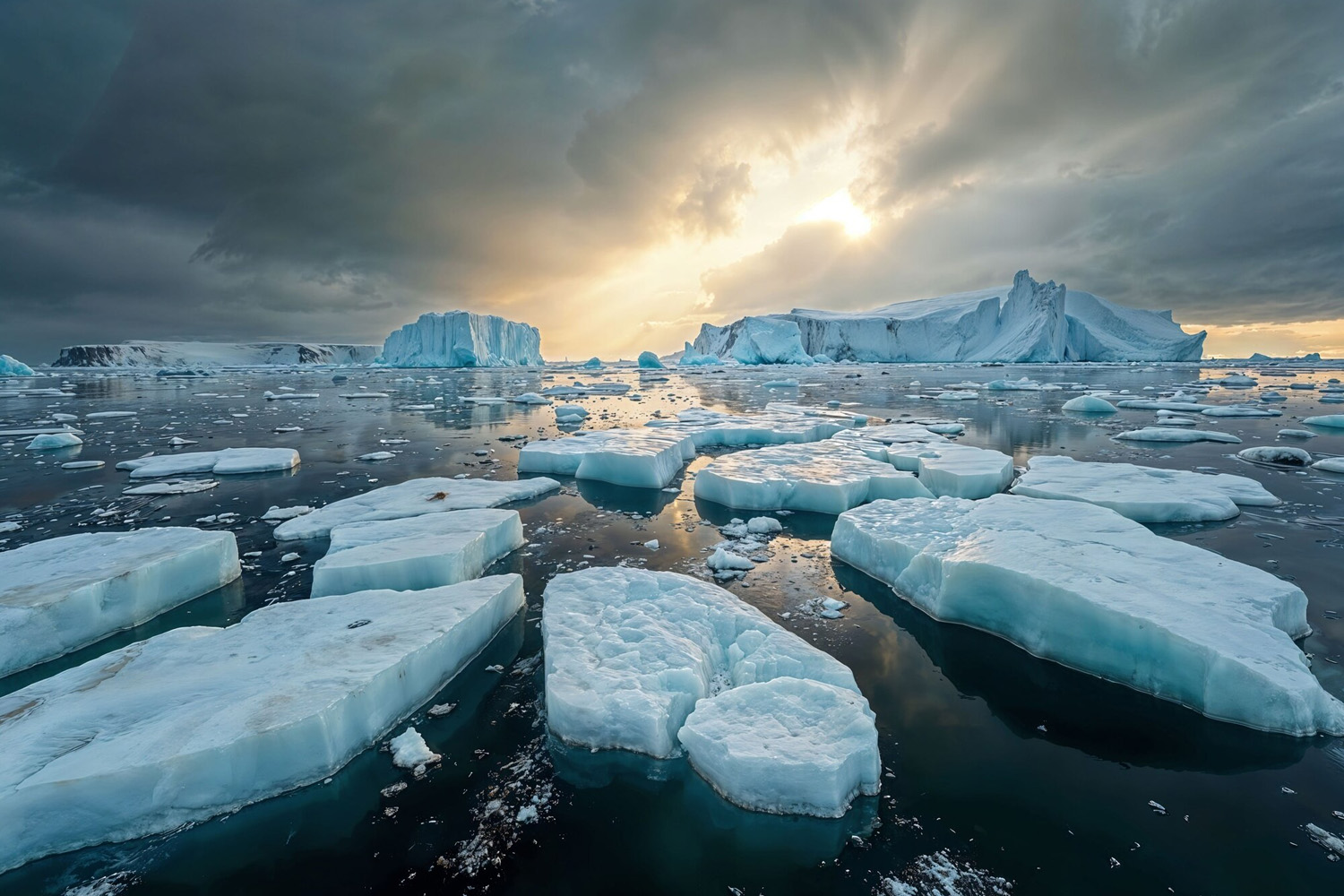
Arctic ice continues to shrink at an accelerating pace, highlighting one of the clearest and most measurable impacts of global climate change. Satellite observations confirm that the region has been losing both sea ice extent and ice thickness over multiple decades, driven primarily by warming air and ocean temperatures.
The Arctic is warming significantly faster than the global average, a process known as Arctic amplification. As a result, summer sea ice has become increasingly thin and fragmented, and seasonal freeze cycles are shorter than they were in previous decades. Scientists have documented that the minimum sea-ice extent reached in recent years ranks among the lowest in the satellite record.
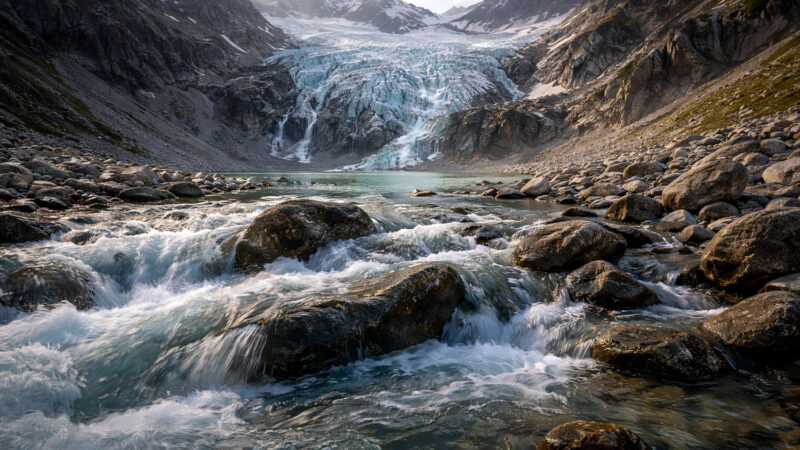
This rapid decline has major global consequences. Melting land ice — particularly from Greenland’s ice sheet — contributes directly to sea-level rise. Warmer temperatures also destabilize permafrost, releasing greenhouse gases that further amplify warming.
Rising sea levels pose increasing risks to coastal communities worldwide, including more frequent flooding, accelerated erosion, and greater infrastructure vulnerability. Many nations now view Arctic ice loss as an urgent climate indicator, prompting calls for stronger emissions reduction commitments and adaptation strategies.
The scientific consensus remains clear: reducing greenhouse-gas emissions is essential to slowing the pace of Arctic ice melt and limiting long-term sea-level rise. Without significant global action, current trends suggest that the Arctic will continue to undergo dramatic and potentially irreversible changes in the decades ahead.
| Indicator | What the Data Shows |
|---|---|
| Rate of Arctic sea-ice decline (area) | Since 1979, Arctic sea ice has declined on average by about 71,000 km² per year in summer and about 31,000 km² per year in winter. (European Environment Agency) |
| Recent record low winter (2025) sea-ice extent | On 22 March 2025, Arctic winter sea-ice maximum was just 5.53 million square miles (≈ 14.33 million km²) — the lowest since satellite records began. (NASA) |
| Summer (September) minimum ice area (2024) | In September 2024, sea-ice extent dropped to ~4.38 million km², about 2.03 million km² below the 1981–2010 average — an area larger than Alaska. (Climate.gov) |
| Decline rate per decade | Between 1979 and 2024, September (summer minimum) sea-ice extent decreased by roughly 12.1% per decade. (Climate.gov) |
| Greenland ice-sheet mass loss (2025) | During the most recent melt year, the Greenland Ice Sheet lost about 100 billion tonnes of ice, continuing a long-term trend of mass loss. (GEUS) |
| Historical sea-level rise potential from Greenland alone | If the entire Greenland ice sheet melted, it could raise global sea levels by over 7 meters. (NOAA Arctic) |
What These Numbers Mean
- The loss of tens of thousands of square kilometers of ice each year shows that the Arctic is shrinking persistently, not just temporarily — summer after summer.
- 2025’s record-low winter sea-ice maximum signals that even the coldest part of the year no longer reliably “recovers” lost ice.
- The shortfall of over 2 million km² in 2024’s summer minimum compared to long-term average gives a sense of how much Arctic ice area has been lost overall — roughly equal to the size of a large U.S. state.
- The accelerated mass loss from Greenland is particularly concerning: every 100 billion tonnes lost adds to global sea levels, making coastal flooding, erosion, and habitat loss more likely worldwide.
- The fact that the Greenland ice sheet alone could raise sea level by 7 meters underscores how high the stakes are if the melt continues unchecked.