How Extreme Temperatures Are Reshaping Ecosystems, Infrastructure, and the European Economy
Heat waves were once viewed as short-lived weather anomalies-dangerous but temporary disruptions that affected limited regions before normal climatic conditions returned. That assumption is rapidly becoming obsolete. Across Europe, prolonged periods of extreme heat are no longer isolated events but increasingly frequent manifestations of a warming climate, with cascading consequences for ecosystems, public health, infrastructure, energy systems, and economic productivity.
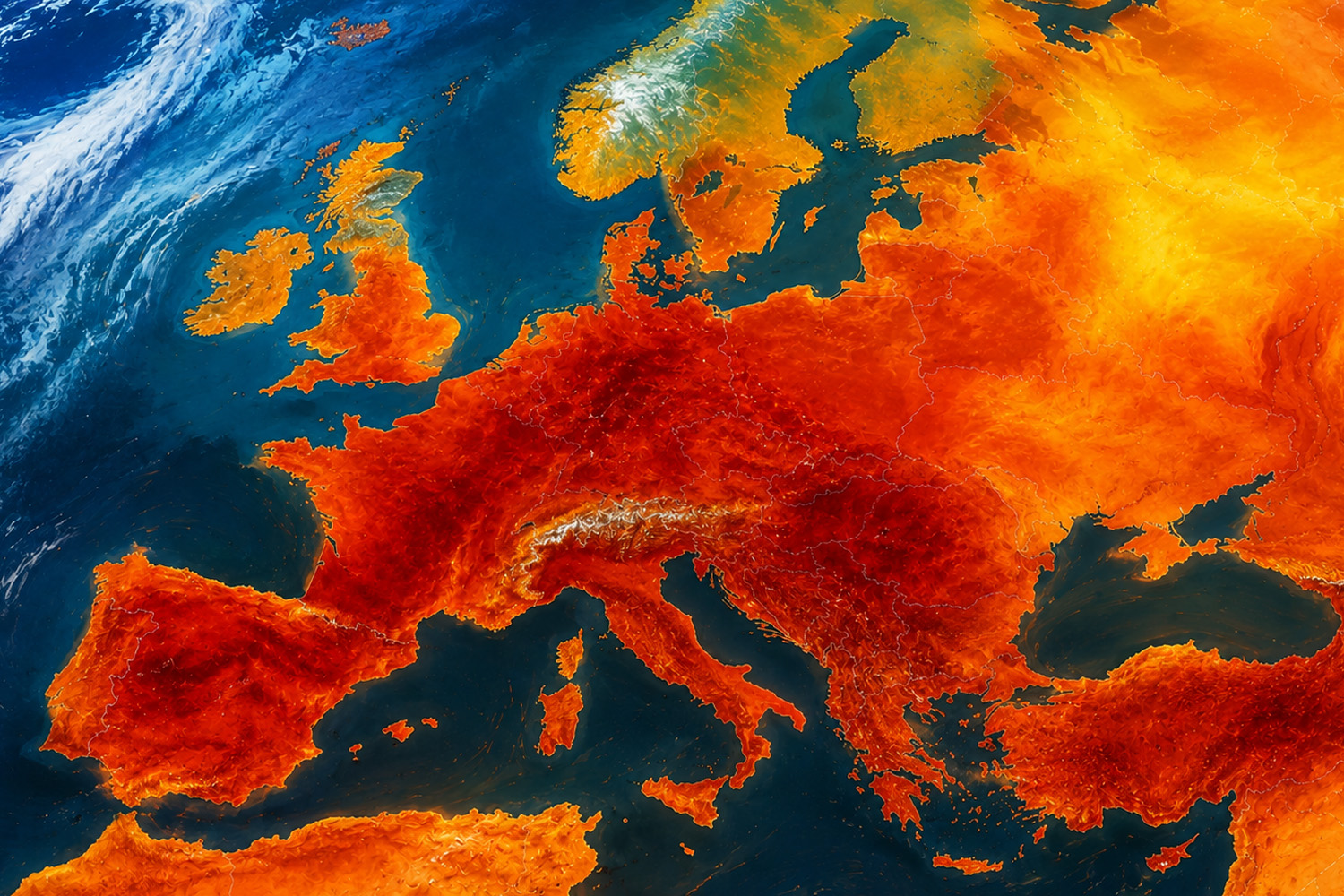
The summer of 2026 illustrates this transition with unusual clarity. Between late June and the end of July, much of Western and Central Europe experienced several successive heat waves. Temperatures exceeded 40°C across parts of France, Spain, Portugal, and neighboring countries, while record-breaking heat extended eastward into Central Europe. These events coincided with widespread wildfires, mounting pressure on electricity grids, transport disruptions, and severe impacts on agriculture.
Beyond the immediate human tragedy, the season demonstrated that heat waves have evolved into systemic risks. They now influence economic performance, strain critical infrastructure, reshape environmental policy, and expose vulnerabilities that extend well beyond the climate sector itself.
Heat Waves Are Becoming More Frequent and More Intense
Scientific evidence consistently shows that global warming increases both the frequency and intensity of heat extremes. Rising average temperatures shift the baseline climate, making exceptionally hot conditions more likely and allowing heat waves to last longer than in previous decades.
Europe is warming faster than the global average. Observational data indicate that the continent has experienced accelerated warming due to its geography, atmospheric circulation patterns, and the interaction between land surfaces and the atmosphere. As soils become drier during prolonged hot periods, less solar energy is used for evaporation and more is converted directly into heating the air, reinforcing extreme temperatures through a positive feedback mechanism.
The succession of four major heat waves between May and July 2026 reflects this changing climate background. Although individual weather events remain influenced by natural atmospheric variability, climate science shows that a warmer atmosphere substantially increases the probability and severity of prolonged heat episodes.
These events should therefore be understood not as isolated anomalies but as part of a broader climatic trend that is altering Europe’s environmental baseline.
Human Health Has Become a Climate Indicator
The most immediate consequence of extreme heat is its impact on human health.
High temperatures place significant physiological stress on the cardiovascular and respiratory systems, particularly among older adults, infants, outdoor workers, and people with chronic illnesses. Unlike floods or storms, heat-related mortality often occurs indirectly through dehydration, cardiovascular complications, respiratory failure, or worsening pre-existing conditions.
During the 2026 heat waves, thousands of excess deaths were reported across several European countries. While precise attribution studies continue to assess the contribution of individual heat events, the scale of mortality highlights the growing vulnerability of densely populated urban regions where the “urban heat island” effect can keep nighttime temperatures dangerously high.
Hospitals faced additional pressure as cooling systems struggled to maintain safe indoor environments. Rising electricity demand, equipment failures, and disruptions to digital infrastructure further complicated emergency medical care.
Heat is therefore emerging not only as an environmental hazard but also as a major public health challenge requiring long-term adaptation strategies.
Ecosystems Are Reaching Critical Stress Thresholds
Extreme temperatures also affect ecosystems in ways that extend far beyond visible wildfire damage.
Prolonged heat accelerates soil moisture loss, weakens vegetation, alters species interactions, and increases tree mortality. Forests that have already experienced years of drought become increasingly vulnerable to insects, pathogens, and large-scale fires.
During the 2026 summer, extensive wildfires swept across parts of France and Spain, burning hundreds of thousands of hectares of land and threatening rural communities. Fire risk expanded well beyond the Mediterranean basin, extending into regions that historically experienced relatively moderate wildfire activity.
According to the European Forest Fire Information System, elevated fire danger spread from the Iberian Peninsula into southwestern France and parts of northwestern Europe, illustrating how climate conditions are changing the continent’s fire geography.
Wildfires produce cascading ecological impacts:
- destruction of wildlife habitat
- loss of biodiversity
- soil degradation
- increased erosion
- reduced carbon storage
- deteriorating air quality
Recovery may take decades, particularly where repeated fires prevent forests from regenerating naturally.
Agriculture Is Facing Structural Climate Pressure
Agriculture remains one of the sectors most directly exposed to prolonged heat.
High temperatures reduce crop yields through multiple mechanisms:
- accelerated evaporation
- soil moisture depletion
- reduced pollination
- heat stress during flowering
- declining livestock productivity
European farmers reportedly experienced approximately €2 billion in agricultural income losses during the mid-2026 heat waves, highlighting how climate variability increasingly translates into economic instability.
The challenge extends beyond a single harvest season.
Repeated heat waves reduce groundwater recharge, increase irrigation demand, accelerate soil degradation, and complicate long-term crop planning. Farmers must increasingly adapt through drought-resistant crop varieties, improved water management, precision agriculture, and revised planting schedules.
Climate adaptation is therefore becoming an integral component of agricultural competitiveness rather than simply an environmental consideration.
Infrastructure Was Designed for Yesterday’s Climate
Much of Europe’s infrastructure was constructed under climatic assumptions that no longer reflect present conditions.
Transport systems illustrate this challenge clearly.
Extreme heat can soften asphalt, deform railway tracks, reduce bridge performance, and increase maintenance requirements. Higher temperatures also decrease the efficiency of electrical equipment and raise cooling demands for critical facilities.
Several hospitals reportedly experienced operational disruptions as cooling systems struggled under sustained high temperatures. Transport delays affected both rail and road networks in multiple countries.
Energy infrastructure faced additional stress.
Electricity demand rose sharply as households and businesses relied more heavily on air conditioning. At the same time, some electricity generation became more difficult. Nuclear power plants that depend on river water for cooling encountered operational constraints as water temperatures increased and river flows declined.
In France, two nuclear reactors were temporarily shut down because insufficient cooling water made continued operation environmentally and operationally challenging.
These interconnected failures demonstrate how heat simultaneously increases electricity demand while constraining certain forms of electricity supply.
Heat Waves Are Now an Economic Variable
Perhaps the most important shift is conceptual rather than meteorological.
For decades, economists and insurers largely treated heat waves as localized disasters with limited macroeconomic significance.
That assumption is rapidly changing.
Extreme heat now influences:
- labor productivity
- agricultural output
- insurance costs
- electricity markets
- public healthcare expenditure
- infrastructure maintenance
- tourism
- industrial production
The reported €3.9 billion in direct losses across selected European sectors during the 2026 heat waves captures only part of the broader economic impact.
Indirect effects-including reduced worker productivity, supply-chain disruption, delayed transport, lower industrial efficiency, and increased insurance liabilities-are considerably harder to quantify but may ultimately exceed direct physical losses.
Climate economists increasingly regard heat as a macroeconomic risk comparable to inflation shocks, energy crises, or major natural disasters.
Adaptation Is Becoming as Important as Mitigation
Reducing greenhouse gas emissions remains essential for limiting long-term climate change.
However, recent European summers demonstrate that adaptation can no longer be considered optional.
Governments are increasingly investing in measures such as:
- urban tree planting
- green roofs
- reflective building materials
- improved flood and fire management
- climate-resilient transport infrastructure
- upgraded electricity networks
- early-warning systems
- heat-health action plans
Cities are also redesigning public spaces to reduce heat exposure through expanded vegetation, improved ventilation corridors, and greater access to shaded areas.
Meanwhile, advances in satellite monitoring, artificial intelligence, and environmental modeling allow authorities to detect wildfire risks earlier, forecast heat impacts more accurately, and optimize emergency responses.
Technological innovation therefore complements, rather than replaces, emissions reduction efforts.
Climate Policy Is Expanding Beyond Carbon
European climate policy increasingly recognizes that reducing emissions alone cannot eliminate climate risks already embedded within the Earth system.
Adaptation policy is consequently expanding into multiple sectors.
Water management has become a strategic priority as prolonged droughts threaten drinking water supplies, agriculture, and hydropower generation.
Building standards are gradually incorporating greater heat resilience through improved insulation, passive cooling design, and higher efficiency requirements.
Insurance markets are also reassessing risk models as recurring heat-related losses become more common.
Financial institutions now increasingly evaluate climate resilience alongside traditional economic indicators when assessing long-term investment risk.
The result is a broader understanding that climate adaptation must be integrated into urban planning, healthcare, transportation, agriculture, energy policy, and financial regulation simultaneously.
Looking Ahead: A New Environmental Baseline
The European heat waves of 2026 underscore a broader transformation in the relationship between climate and society. Extreme heat is no longer simply a seasonal weather phenomenon; it is becoming a defining feature of environmental risk in a warming world.
Its effects extend across interconnected systems. Ecosystems lose resilience as forests and soils endure repeated stress. Agriculture faces mounting pressure from declining water availability and crop losses. Energy networks and transport infrastructure must operate under conditions for which they were not originally designed. Public health systems confront growing demands as heat-related illnesses and mortality increase. At the same time, businesses, insurers, and governments are being forced to incorporate climate risk into long-term planning.
While continued reductions in greenhouse gas emissions remain essential to limit future warming, the impacts already unfolding make adaptation an equally urgent priority. Building more resilient cities, protecting water resources, modernizing infrastructure, and strengthening ecosystem restoration will determine how effectively Europe can cope with increasingly frequent and intense heat events.
The summer of 2026 demonstrates that heat waves have evolved from episodic weather hazards into systemic environmental and economic forces. Understanding them through a systems-level perspective is no longer simply an academic exercise-it is becoming essential for managing the resilience of both natural ecosystems and modern societies.
Related Analysis:
How Earth’s Climate Has Changed Over the Past Century: A Century of Transformation