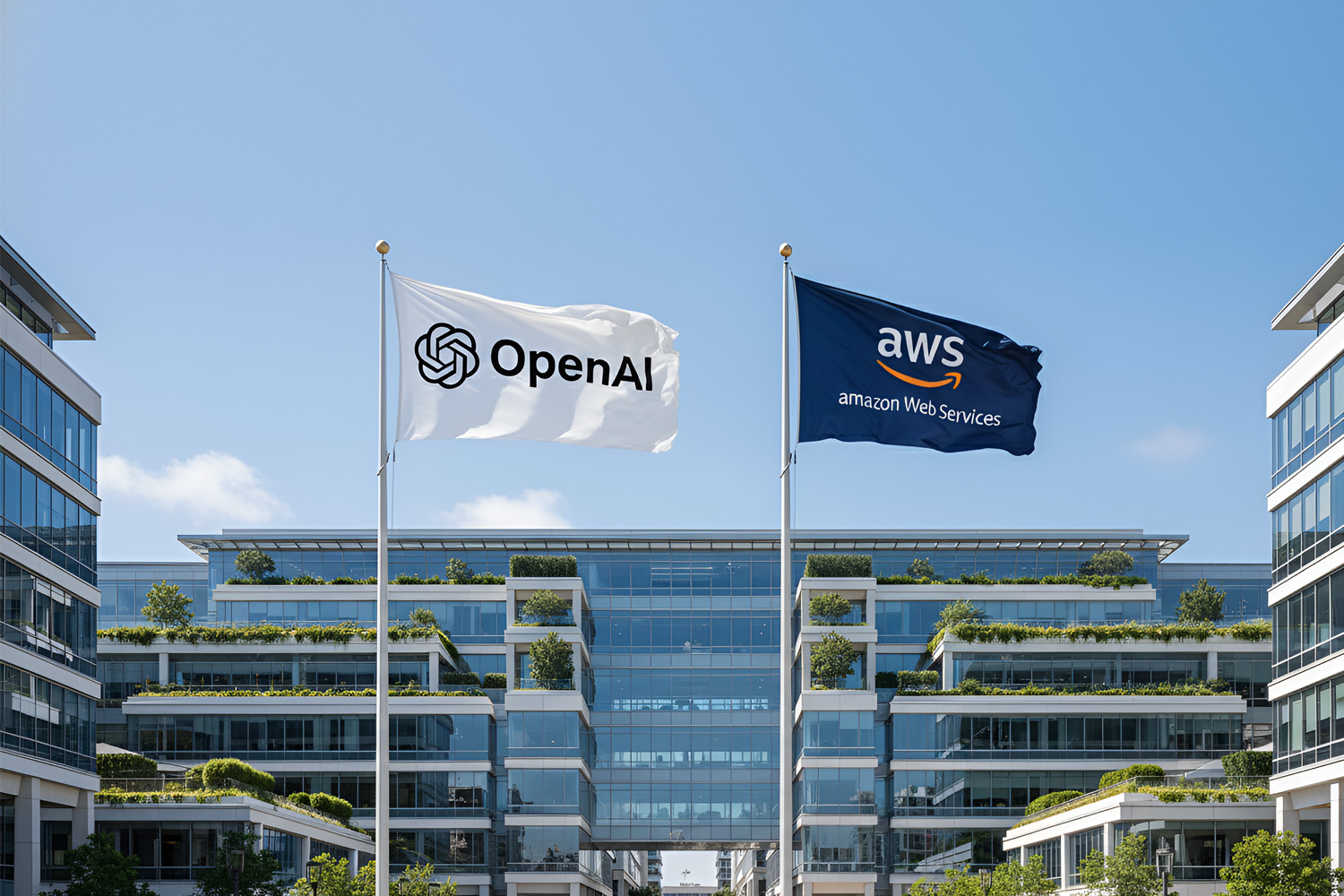
OpenAI has struck a seven-year, $38 billion cloud-services agreement with Amazon Web Services (AWS), marking a major shift in its AI infrastructure strategy.
Under this deal, OpenAI will gain access to hundreds of thousands of Nvidia GPUs, including advanced GB200 and GB300 chips configured on AWS EC2 UltraServers. This compute capacity will ramp up over time, with full deployment targeted by the end of 2026 and potential expansion through 2027.
The agreement comes shortly after OpenAI restructured its corporate setup, which removed Microsoft’s right of first refusal and gave OpenAI more flexibility to partner with other cloud providers. OpenAI co-founder and CEO Sam Altman said, “Scaling frontier AI requires massive, reliable compute … Our partnership with AWS strengthens the broad compute ecosystem that will power this next era.”
From Amazon’s side, AWS CEO Matt Garman called the move a major validation of its infrastructure capabilities — citing high performance, scale, and security as key advantages for supporting OpenAI’s ambitious AI workloads.
The deal is not just about raw power: it gives OpenAI more strategic independence. By diversifying its cloud provider base, OpenAI reduces its reliance on Microsoft Azure and builds resilience in its long-term compute strategy.
Analysts view this as a pivotal moment in the AI infrastructure race. OpenAI’s huge financial commitment reflects its long-term ambition to scale AI models, while for AWS, the deal reinforces its position in the generative AI boom.
Key Implications:
- Massive Compute Scale: Access to specialized GPU clusters means OpenAI can train more powerful and complex AI models.
- AI Compute Diversification: OpenAI is no longer exclusively tied to Microsoft, lowering risk and increasing bargaining power.
- Cloud Competition: AWS strengthens its role in the AI arms race, competing more aggressively with Microsoft and Google.
- Question of Sustainability: Some commentators warn that such high infrastructure spending (OpenAI is reportedly planning to invest up to $1.4 trillion in compute) could raise long-term financial risks.