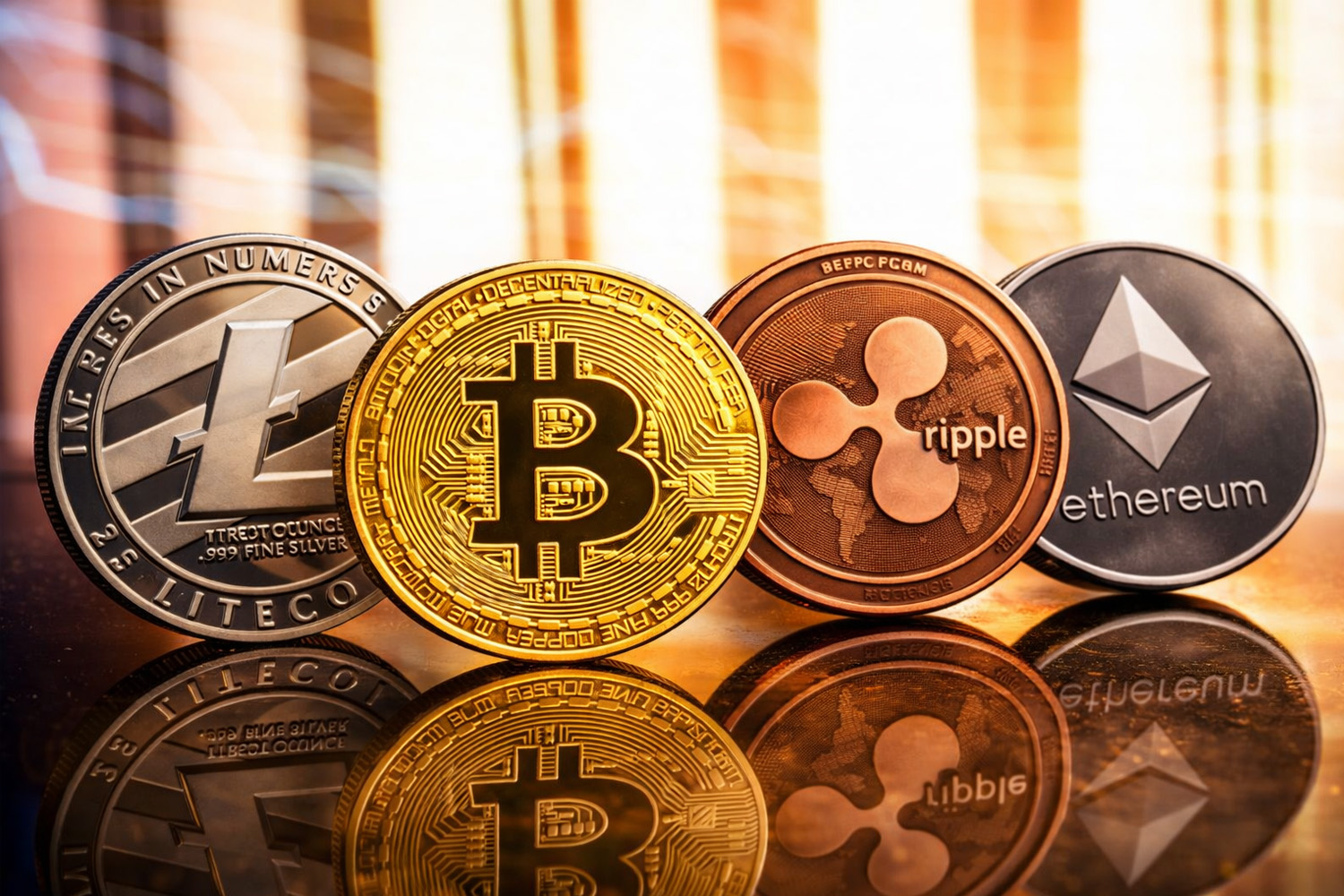
The cryptocurrency market has been shaken in early 2026, with Bitcoin’s price falling sharply from its late-2025 record highs and dipping below key psychological levels like $70,000 in early February. This downturn has triggered broader market losses, with major assets like Ethereum (ETH) and XRP also declining, and increased volatility stirring debate about which digital assets can be considered more “reliable” moving forward.
Why It Matters
Bitcoin’s recent slump has challenged its long-standing narrative as a reliable store of value or “digital gold,” particularly as it failed to hold ground during broader market stress. Some analysts argue that this downturn reflects shifting investor sentiment and macroeconomic uncertainty rather than a fundamental collapse, but the impact has been real: institutional exposure via ETF outflows and reduced corporate buying have weighed on price action.
In this unpredictable environment, many traders are looking beyond Bitcoin for alternative assets that may offer stronger utility, different catalysts, or clearer use cases.
Cryptocurrencies With Potential Momentum
Ethereum (ETH) — Despite a price pullback alongside Bitcoin, Ethereum remains the second-largest crypto by market cap and a core infrastructure for decentralized finance (DeFi), tokens, and smart contracts. Analysts point to network upgrades and active institutional participation in ETH-based ETFs as factors that could help ETH rise over the long term, with forecasts ranging from mid-five figures to higher levels in 2026.
Solana (SOL) — Known for faster transaction speeds and lower fees, Solana has shown resilience even during market turbulence. Institutional inflows and discussions around potential ETFs may support SOL’s wider ecosystem growth, particularly in decentralized applications and DeFi.
XRP (XRP) — Ripple’s native token made notable gains during 2025, benefiting from regulatory clarity after years of legal scrutiny, which encouraged institutional interest and ETF inflows. Some analysts see XRP continuing to build real-world usage, especially in cross-border payments.
Chainlink (LINK) and Cardano (ADA) — While smaller in market cap than BTC or ETH, these networks support unique use cases in oracle services and long-term ecosystem development, respectively, potentially positioning them well if the market broadens beyond speculation.
Trend Impact
Across the crypto landscape, two overarching trends appear to be shaping future prospects:
- Institutional participation: Spot ETFs and regulated products are increasing exposure to top assets, anchoring some degree of credibility and liquidity.
- Technological utility: Networks supporting real-world functions — smart contracts, DeFi, payment settlement — may attract capital even when speculative assets slide.
Analysts also warn that stablecoins and tokenized real-world assets could gain prominence in 2026, offering alternatives to volatile native tokens by anchoring value to traditional financial instruments.
No Guarantees in a Volatile Market
While some cryptocurrencies show stronger fundamentals or clearer use cases, the market remains highly sensitive to macroeconomic forces, regulatory shifts, and investor sentiment. Predictions vary widely, and risk remains inherent in every digital asset.
For investors and observers alike, the takeaway in this changing environment is that diversification, long-term utility, and regulatory clarity are emerging as key factors — far more so than short-term price performance alone.