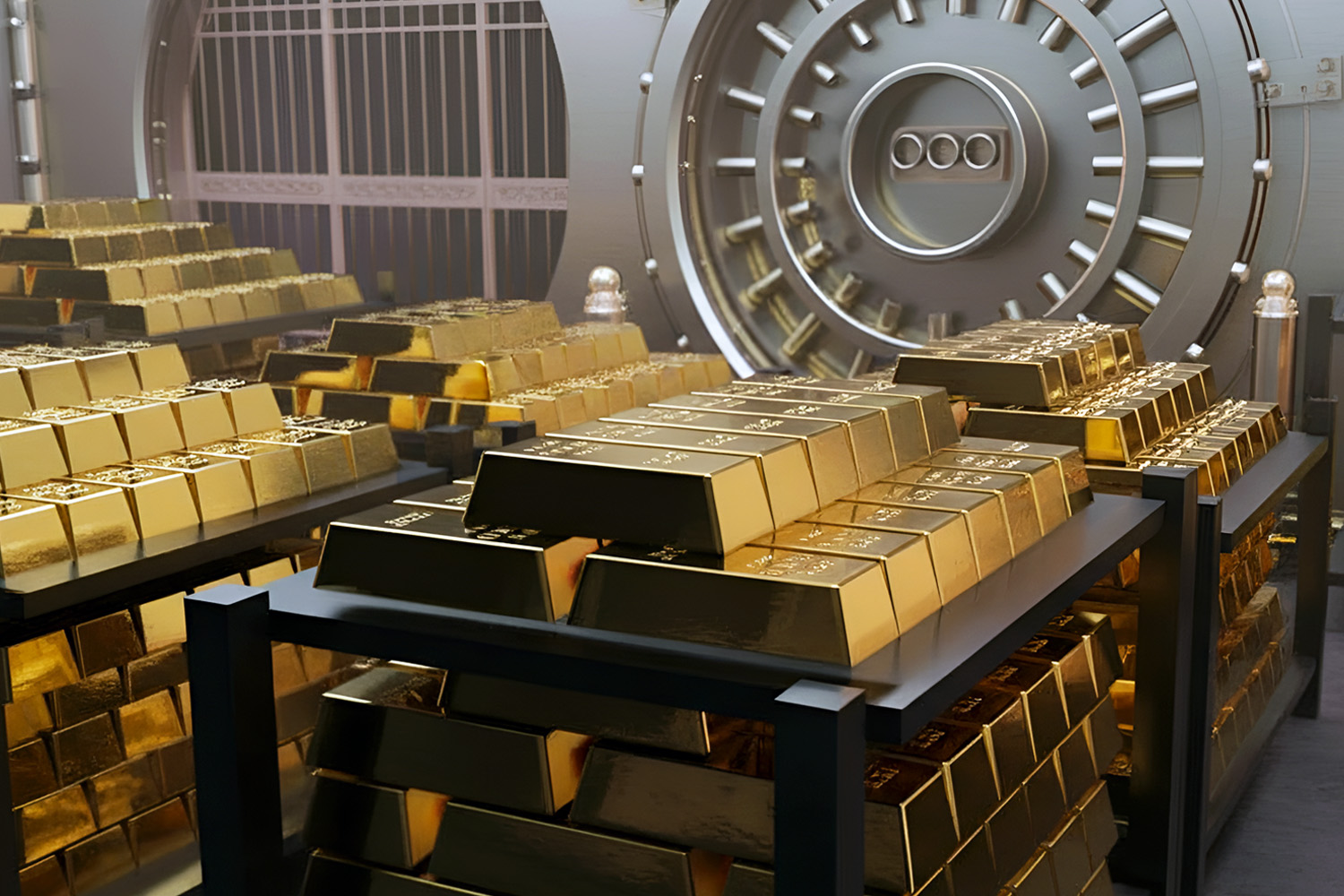
The Importance of Gold Reserves
Gold reserves — the holdings of physical gold held by a country’s central bank or government — play a critical role in national economic strategy. Below are the main reasons why they matter:
- Diversification of reserves
Countries hold gold to diversify away from purely fiat-currency reserves. Gold doesn’t carry the same counter-party risk as foreign currency or government bonds. - Store of value and hedge against crises
Gold is considered a long-term store of value, especially during times of financial instability or inflation. - Liquidity and reserve asset
Because gold is globally liquid and not tied to any one country’s currency, it offers flexibility in times of geopolitical stress or currency shocks. - Signal of economic strength
Large gold reserves can boost confidence in a country’s monetary system and act as a buffer in balance-of-payments crises or credit events. - Geopolitical and monetary strategy
Central banks increasingly cite gold’s relevance for economic sovereignty, de-dollarisation and resilience in global currency shifts.
In sum, gold reserves serve as a foundational asset for many national reserve portfolios — not because they yield interest, but because they offer strategic stability, diversification and credibility.
Top 10 Countries by Gold Reserves
Here are the ten countries with the largest verified gold reserves (tonnes) as of recent available data:
| Rank | Country | Gold Reserves (tonnes) | Gold Reserves (kilograms) | Gold Reserves (troy ounces) |
|---|---|---|---|---|
| 1 | United States | 8,133.5 | 8,133,500 | 261,498,097 |
| 2 | Germany | 3,351.5 | 3,351,500 | 107,753,227 |
| 3 | Italy | 2,451.8 | 2,451,800 | 78,827,201 |
| 4 | France | 2,437.0 | 2,437,000 | 78,351,369 |
| 5 | Russia | 2,335.9 | 2,335,900 | 75,100,929 |
| 6 | China | 2,279.6 | 2,279,600 | 73,290,842 |
| 7 | Switzerland | 1,039.9 | 1,039,900 | 33,433,561 |
| 8 | India | 876.2 | 876,200 | 28,170,484 |
| 9 | Japan | 845.9 | 845,900 | 27,196,317 |
| 10 | Turkey | 634.7 | 634,700 | 20,406,079 |
|
Note: Tonnes are metric tonnes. Troy ounces calculated at 32,150.7466 troy ounces per metric tonne; values rounded to nearest ounce. Source: World Gold Council / IMF (data to March 2025).
These figures are based on the most recent publicly available data by the World Gold Council and other sources, often covering holdings as of March or June 2025. |
||||
What This Means
- The United States’ dominance (~8,100 tonnes) underscores its historic role in global monetary systems.
- European countries like Germany, Italy and France continue to rely heavily on gold as part of their reserve architecture.
- Emerging economies such as Russia, China and India are increasingly emphasising gold to reinforce economic independence and mitigate currency risk.
- Even though gold does not produce yield, its role as a strategic asset remains strong — especially as central banks expect its importance to grow. For example, 76% of surveyed central banks said they expect gold’s share of reserves to rise over the next five years.
Final Comment
Gold reserves may not attract headlines like equities or real estate, but for nations they serve as an essential anchor in the reserve‐management toolkit. In an era of mounting economic uncertainty, currency shifts and geopolitical change, the stability and global liquidity of gold continue to make it a core strategic asset.