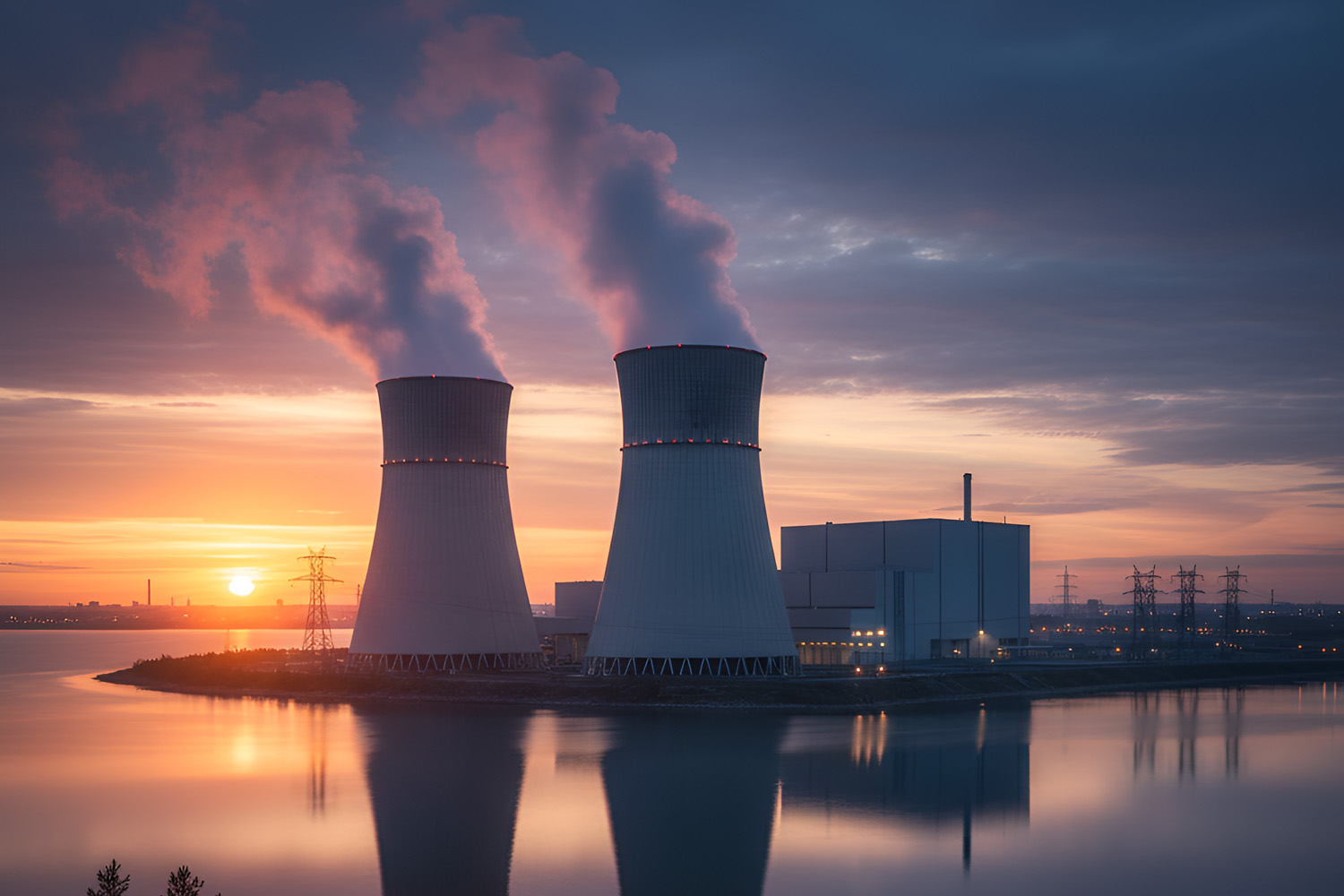
The United States government and reactor-maker Westinghouse have entered into a landmark partnership worth US $80 billion, aimed at constructing a fleet of new nuclear reactors across the country.
Under the agreement announced on 28 October 2025, the U.S. government will facilitate financing, fast-track permitting and supportive regulatory arrangements for Westinghouse-led reactor projects. In return, once a final investment decision is made and construction contracts are in place, the government will receive a 20 % share of cash distributions by Westinghouse above US $17.5 billion.
Additionally, if Westinghouse’s market valuation exceeds US $30 billion by 1 January 2029 (or thereabouts), the government may convert its participation interest into a warrant entitling it to 20 % equity in the company.
The programme will deploy Westinghouse’s AP1000 reactor technology (and potentially smaller modular designs) across the United States.
Why this matters
- The scale of the deal reflects a major push to revive U.S. nuclear-power construction after decades of stagnation.
- The government’s profit-sharing and near-equity stake structure mark an unusual model of public-private partnership in critical infrastructure.
- The reactor build-out will bolster efforts to meet rising electricity demand tied to data-centres, artificial-intelligence infrastructure, grid resilience and climate goals.
Challenges & risks
- The last large U.S. reactor builds (also AP1000 units at Plant Vogtle) ran years behind schedule and billions over budget, highlighting the complexity and cost risk of new nuclear projects.
- Some safety-advocacy groups and regulatory observers caution that the strong government financial interest could blur traditional regulatory independence in overseeing reactor licensing and construction.
Next steps
- Final investment decisions and binding contracts will be required before the government’s participation interest vests.
- Project-by-project roll-out details (locations, reactor sizes, timelines) are expected in the months ahead.
- Monitoring how rapidly permitting reforms and industrial-supply-chain mobilisation occur will be key to determining whether construction schedules remain ambitious or slip.
- Tracking whether Westinghouse achieves the $30 billion valuation threshold by 2029 will determine whether the government’s equity conversion clause is triggered.
This agreement marks a significant turning point in U.S. nuclear-energy policy, blending industrial strategy, infrastructure investment and public-private partnership on an unprecedented scale.