Strategic Context
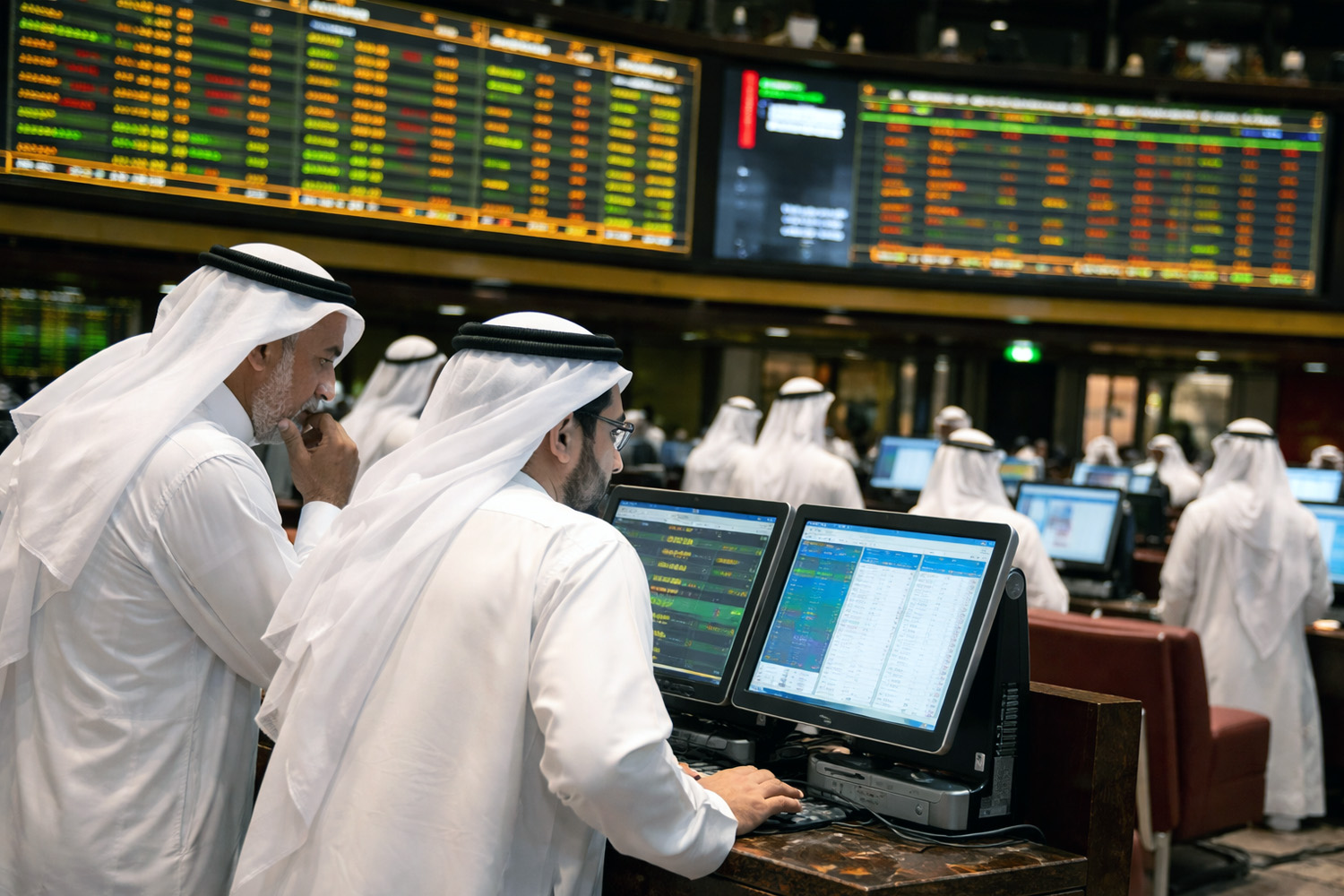
Financial markets in the Gulf Cooperation Council (GCC) states are deeply integrated into global capital flows, energy pricing mechanisms, and sovereign wealth management strategies. Over the past two decades, exchanges in the United Arab Emirates and Kuwait have evolved into important regional hubs, reflecting not only hydrocarbon wealth but also diversification efforts into banking, real estate, logistics, and technology.
In periods of geopolitical tension involving Iran and its regional adversaries, Gulf markets serve as an early indicator of investor sentiment. Decisions to suspend trading, therefore, carry significance beyond immediate volatility; they signal how regional authorities perceive systemic risk and capital stability.
What Happened
Regulators in the United Arab Emirates and Kuwait announced the temporary closure of their stock exchanges amid escalating regional tensions linked to conflict with Iran. Authorities stated that trading would resume once the situation stabilizes, citing national risk considerations and the need to protect investors from disorderly market conditions.
In other regional markets, authorities have not uniformly adopted trading suspensions. Some exchanges have remained open while implementing volatility controls, trading halts for specific securities, or enhanced disclosure requirements. Central banks across the region have emphasized liquidity support and financial system resilience without announcing systemic shutdowns.
Why It Matters
Market closures are rare and symbolically powerful measures. They suggest that regulators judge price discovery under current conditions to be potentially destabilizing rather than stabilizing.
1. Signaling Effect
Closing exchanges signals to both domestic and international investors that authorities prioritize financial stability over short-term liquidity. While intended to prevent panic-driven selloffs, such measures also communicate that geopolitical risk has crossed a threshold of seriousness.
2. Sovereign Risk Perception
Gulf economies, particularly hydrocarbon exporters, are closely tied to regional security dynamics. A trading suspension may affect how global investors assess sovereign risk, credit spreads, and currency stability. Even if macroeconomic fundamentals remain strong, political risk premia can widen.
3. Capital Flow Sensitivity
GCC markets have become increasingly accessible to foreign portfolio investors. In times of crisis, capital tends to rotate toward perceived safe havens. Temporary closures can interrupt capital flight but may also delay repricing, concentrating volatility when markets reopen.
4. Energy Infrastructure Proximity
Many Gulf economies are geographically proximate to critical energy transit routes. Escalation involving Iran raises concerns about shipping lanes, energy exports, and infrastructure vulnerability. Financial markets internalize these risks rapidly.
Market / Financial / Sector Impact
Energy Markets:
Any regional conflict involving Iran influences oil and gas pricing expectations. Gulf exporters may benefit from short-term price increases, yet sustained instability can disrupt logistics and insurance costs. Energy-linked equities are particularly sensitive to these dynamics.
Banking Sector:
Banks in the UAE and Kuwait are well-capitalized by international standards, but financial institutions are typically the first to reflect systemic stress through equity prices and interbank funding conditions. Market suspensions aim to prevent abrupt repricing in this sector.
Real Estate and Construction:
These sectors are highly exposed to investor confidence and expatriate capital flows. Heightened geopolitical uncertainty may delay investment decisions and project financing.
Sovereign Wealth Funds (SWFs):
Regional sovereign wealth funds manage globally diversified portfolios. While domestic exchanges are temporarily closed, SWFs continue operating internationally, potentially acting as stabilizing forces through capital allocation and liquidity management.
Competitive Landscape
The varied responses among Gulf states highlight differences in risk tolerance and financial structure.
- Financial centers with large foreign investor participation may opt for precautionary measures to prevent rapid outflows.
- Other states with lower foreign exposure or deeper domestic liquidity pools may maintain open markets with circuit breakers.
- Central banks across the GCC have historically coordinated monetary stability measures due to currency pegs to the U.S. dollar.
This divergence illustrates that while GCC economies share structural similarities, their financial ecosystems and regulatory philosophies are not uniform.
Risks & Uncertainties
Several factors will determine the trajectory of regional markets:
Duration of Tensions:
Short-lived escalation may limit economic fallout. Prolonged instability increases the probability of sustained capital outflows and rating pressure.
Energy Supply Disruptions:
If transit routes or production facilities face disruption, secondary economic effects would extend beyond the region.
Global Monetary Conditions:
Tight global liquidity environments amplify the impact of geopolitical shocks on emerging markets.
Investor Confidence:
The effectiveness of trading suspensions depends on whether they restore confidence or merely defer volatility.
Bigger Trend Implications
The episode reflects broader global trends reshaping financial systems.
First, geopolitical risk is increasingly embedded in market infrastructure decisions. Exchanges and regulators are more willing to intervene decisively to maintain stability.
Second, energy geopolitics remains central to global financial stability. Despite diversification narratives, oil-exporting regions continue to exert disproportionate influence during crises.
Third, emerging markets are refining crisis-management tools. Rather than relying solely on monetary policy, authorities are using administrative measures — including trading suspensions — to manage systemic risk.
Finally, the situation underscores the interconnected nature of capital markets. Even localized geopolitical events can trigger global portfolio adjustments, particularly when they involve key energy corridors.
Conclusion
The temporary closure of stock exchanges in the United Arab Emirates and Kuwait represents more than a defensive regulatory step. It is a strategic signal about risk perception, capital management, and regional stability.
How other Gulf states balance openness with precaution will shape investor confidence in the region’s financial architecture. In a global environment increasingly defined by geopolitical fragmentation, the management of financial stability during crises may become as consequential as the crises themselves.
Gulf Countries – Key Hydrocarbon Exporting Nations (2024–2025 Data)
| Country | OPEC Member (2024) | Crude Oil Production (2024 avg, million bpd) | Proven Oil Reserves (bn barrels) | Natural Gas Production (bcm/year) | Proven Gas Reserves (tcm) | Hydrocarbon Share of Exports (%) |
|---|---|---|---|---|---|---|
| Saudi Arabia | Yes | 9.0 – 9.5 | 267 | ~120 | 8.5 | ~75% |
| United Arab Emirates | Yes | 3.0 – 3.2 | 111 | ~60 | 7.7 | ~65% |
| Kuwait | Yes | 2.5 – 2.7 | 101 | ~18 | 1.8 | ~90% |
| Qatar | No (Left OPEC in 2019) | ~1.3 | 25 | ~180 | 24.7 | ~85% |
| Oman | No | ~1.0 | 5.4 | ~40 | 0.7 | ~70% |
| Bahrain | No | ~0.2 | 0.1 | ~15 | 0.2 | ~60% |
Note: 2024 represents the latest fully verified annual data. 2025 production reflects ongoing OPEC+ adjustments and regional market conditions.