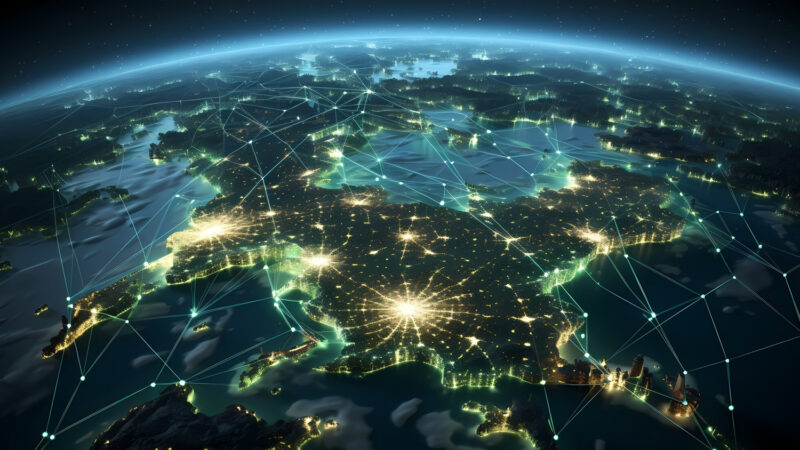
The global balance of economic power is undergoing a profound transformation. Once dominated by North America and Western Europe, the world’s economic growth is increasingly being driven by emerging markets across Asia, Africa, and Latin America. These regions are not only expanding rapidly but also redefining global trade, investment patterns, and financial influence.
According to data from the International Monetary Fund (IMF), emerging and developing economies now account for more than 60% of global GDP (on a purchasing power parity basis) — a dramatic increase from just 42% in 2000. Asia continues to lead this momentum, with countries such as China, India, Indonesia, and Vietnam becoming engines of innovation, manufacturing, and digital transformation.
China remains the world’s second-largest economy and a key player in global infrastructure development through its Belt and Road Initiative. Meanwhile, India’s expanding technology and service sectors, combined with a youthful population, position it as one of the fastest-growing major economies. Southeast Asian nations are also benefiting from shifting supply chains as global manufacturers diversify away from China.
Across Africa, growth is being powered by improvements in infrastructure, digital connectivity, and resource-based industries. The African Continental Free Trade Area (AfCFTA), which connects over 1.4 billion people, represents one of the world’s largest emerging trade blocs and offers vast potential for intra-African commerce. Nations such as Nigeria, Kenya, Egypt, and South Africa are becoming regional hubs for finance, innovation, and renewable energy.
In Latin America, the focus is increasingly on sustainable growth and industrial modernization. Brazil and Mexico, the region’s largest economies, are attracting new investments in green energy, automotive production, and technology. Meanwhile, smaller economies such as Chile and Colombia are positioning themselves as leaders in lithium extraction and clean energy supply chains — vital to the global transition toward electric mobility.
However, these opportunities come with challenges. Inflationary pressures, political instability, and dependence on commodity exports continue to pose risks. Access to financing and infrastructure development remains uneven across regions. Nevertheless, international investors and multilateral institutions are showing growing confidence in the long-term prospects of emerging markets.
The rise of emerging economies is not just an economic story — it marks a fundamental realignment of global influence. With youthful populations, expanding consumer markets, and growing technological capacity, these nations are shaping the next chapter of globalization. As the world economy continues to diversify, the emerging markets of Asia, Africa, and Latin America are poised to become central to global prosperity in the decades ahead.