Yamaha is pushing the boundaries of two-wheel mobility with advanced self-balancing technologies that promise to improve safety, stability, and rider experience. From concept machines to prototype assistance systems, here’s an overview of what Yamaha has developed and where it’s headed.
Key Technologies & Concepts
1. AMSAS (Advanced Motorcycle Stabilization Assist System)
Yamaha’s AMSAS is a system aimed at making motorcycles safer at low speeds and in unstable situations. It uses a six-axis inertial measurement unit (IMU) combined with drive and steering actuators to help keep the bike upright when it would otherwise tip over—like at slow roll, during starts and stops.
AMSAS is being tested on modified models such as the Yamaha YZF-R25. The aim is to shrink down the component sizes so the tech can eventually be used more broadly, possibly even on bicycles and other personal mobility devices.
2. Motoroid & Motoroid 2 Concepts
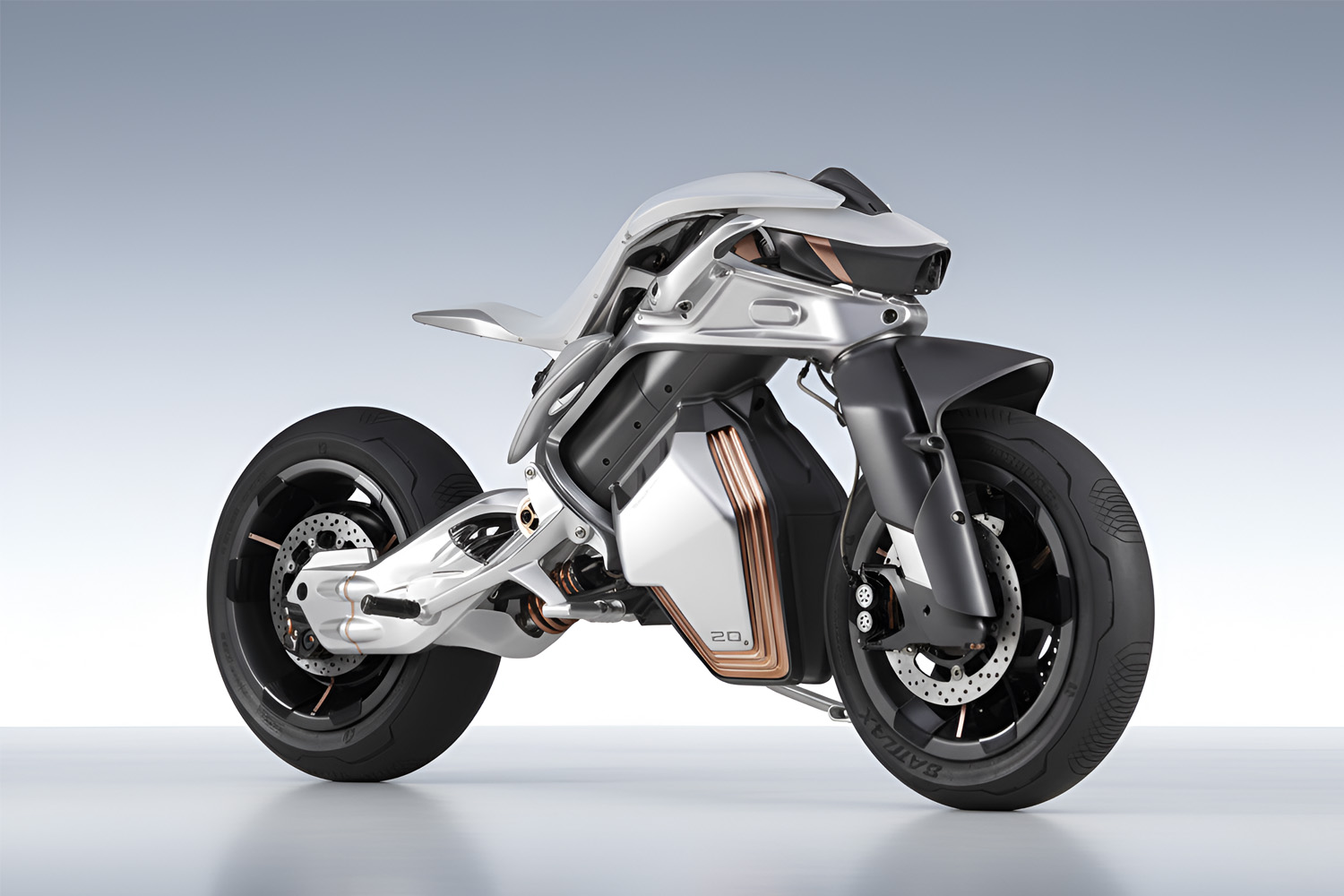
Yamaha’s Motoroid series are concept electric motorcycles showcasing futuristic self-balancing, AI, gesture control, and human-machine interface features.
Some of the standout features include:
- AMCES (Active Mass Center Control System): This system shifts the bike’s center of mass in real time by coordinating the swingarm and battery box (among other moving parts) to enhance stability.
- Facial recognition & gesture control: Motoroid 2 can recognize its owner and respond to gestures. It also uses rigid hand grips rather than traditional handlebars, relying on electronic control inputs to assist steering and movement.
- Self-balancing at standstill: The concept includes technology to let the bike stand upright when stationary (for example, rising off the sidestand) and balance itself without rider input.
Safety, Challenges & Implications
- Improved safety at low speeds: Because many motorcycle accidents happen during low-speed maneuvers (starting, stopping, parking), a self-balancing assist like AMSAS could notably reduce tip-overs and crashes.
- Complexity and cost: Integrating sensors, actuators, and control systems adds weight, cost, and engineering challenges. Downsizing without sacrificing performance is a major hurdle.
- Production readiness: Most of these techs are still in concept or prototype stages. Motoroid 2 and AMSAS are not yet widely available in commercial production models.
What’s Next
Yamaha aims to bring these technologies gradually into production. Key goals include:
- Making AMSAS more compact and cost-effective so that it becomes a feature on everyday bikes.
- Exploring use across vehicle types beyond conventional motorcycles, including electric bicycles and other personal mobility machines.
- Further refining AI, gesture recognition, and human-machine interfaces to create more intuitive riding experiences in concepts like Motoroid.
Yamaha’s self-balancing bike technology, including AMSAS and the Motoroid series, represents a promising shift toward safer, smarter, and more adaptive two-wheel transport. As engineering challenges are overcome and components are refined, features once seen in futuristic concepts may begin to appear in everyday motorcycles.