BMW (Bayerische Motoren Werke AG) is one of the world’s most recognisable automotive brands, renowned not just for engineering and performance but for a distinct design legacy. From early pre-war sports cars to cutting-edge electric concepts, BMW’s form has helped define automotive style across generations.
Legendary Designs Through the Ages
Classic Icons That Defined BMW
BMW 328 – The 1930s Pioneer
One of the first truly celebrated sports cars from BMW, the 328 combined lightweight dynamics with elegant lines, setting design standards for future models and helping establish the company’s performance image. Its influence continues to inspire proportions and styling cues decades later.
BMW 507 – Post-War Elegance by Albrecht von Goertz
The BMW 507, designed by German industrial designer Albrecht von Goertz, remains an icon of 1950s automotive beauty, with graceful curves, long hood and short rear deck that epitomised luxury sports car design of its era.
BMW 2002 & Neue Klasse – Sport Sedan Breakthrough
Introduced in the late 1960s during BMW’s “Neue Klasse” era, the BMW 2002 established the brand’s reputation for sporty, driver-focused vehicles. It helped launch the modern 3 Series lineage and set a design foundation of clean proportions and purposeful stance.
BMW M1 – Mid-Engined Supercar by Giugiaro
BMW’s first supercar, the M1, was shaped by master designer Giorgetto Giugiaro of Italdesign. Its low-slung silhouette and wedge profile made it a true automotive icon and a timeless symbol of performance-oriented design.
BMW Z1 and Z8 – Innovation Meets Heritage
The BMW Z1 gained attention with its vertically sliding doors, while the later BMW Z8, with exterior by Henrik Fisker and interior by Scott Lempert, blended retro cues from the 507 with modern precision and became a design favourite among collectors.
Designers Who Shaped BMW’s Identity
BMW’s signature “kidney grille”, balanced proportions, and dynamic profiles have roots in contributions from many influential designers:
- Albrecht von Goertz – Crafted the 503 and 507 in the 1950s, key to establishing BMW’s luxury sports image.
- Giorgetto Giugiaro – Legendary Italian designer behind the M1 supercar, merging racing performance with striking aesthetics.
- Joji Nagashima – Japanese-born BMW designer known for shaping the E39 5 Series, E90 3 Series and Z3 — models praised for timeless proportions and dynamic presence.
- Chris Bangle – BMW design head during the 2000s who brought bold, polarising concepts such as the BMW GINA fabric-skinned visionary model, pushing design beyond traditional boundaries.
- Henrik Fisker – Led the exterior design of the BMW Z8, a modern classic.
BMW has also worked with concept designers like Marcello Gandini (the BMW Garmisch concept) and across studios such as Bertone, reinforcing its openness to external creative influence.
Modern BMW Design Leaders & Innovations
Today, BMW’s design evolution is overseen by an expanded and reorganised design leadership to reflect the company’s move toward electrification, digitalisation, and sustainable mobility:
Current Design Leadership
- Adrian van Hooydonk – Senior Vice President of BMW Group Design, guiding the global design vision and new language created for the Neue Klasse family.
- Maximilian Missoni – Former Polestar design chief now responsible for BMW’s upper mid-size and luxury design direction.
- Oliver Heilmer – Leads the design of compact and mid-size BMW models, including performance-oriented M variants.
- Claudia Braun – Heads the Colour and Material design department across BMW brands, emphasising sustainable and expressive surfaces.
- Anders Warming – Focuses on advanced concept designs and future aesthetics through Designworks.
This organisational approach reflects BMW’s aim to cultivate a more diverse range of design perspectives, aligning classic identity with future-focused innovation.
BMW’s Design Today and Tomorrow
Neue Klasse Design Language
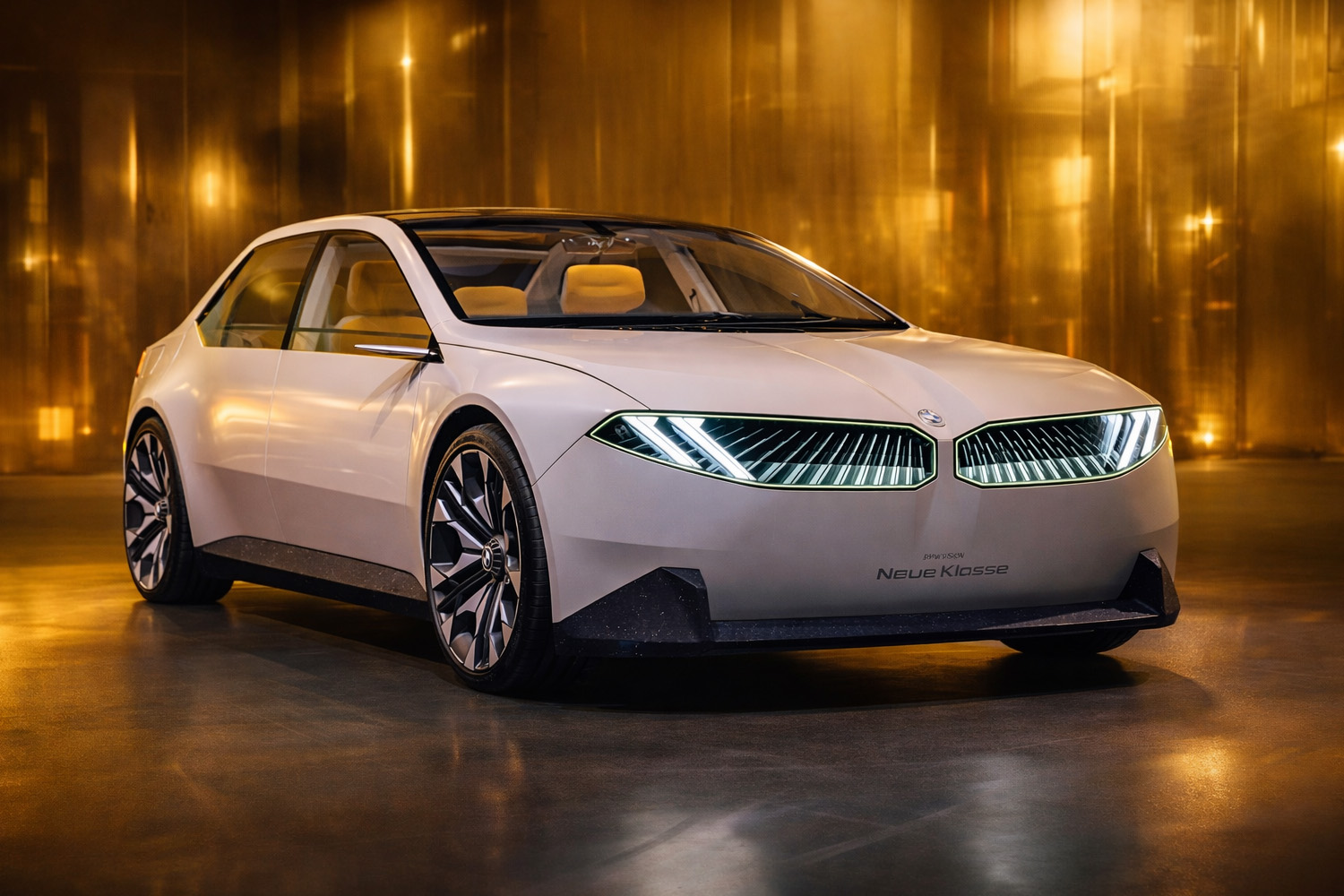
BMW’s Neue Klasse design philosophy marks a significant shift in modern styling. It modernises core brand attributes — dynamic proportions, reinterpretation of the kidney grille, and minimalist aesthetics — into a cohesive new identity for electric-era vehicles such as the 2026 BMW iX3. This approach aims to balance tradition with a forward-looking, technologically driven design language that adapts to digital interiors and sustainability imperatives.
Innovations in Materials and Digital Experience
BMW’s design strategy increasingly incorporates sustainable materials, advanced user interfaces, and seamless digital-physical integration as part of its holistic vehicle experience — not just outer shape. Digital displays, intuitive occupant environments, and immersive lighting all play into the modern design narrative.
Lasting Legacy and Future Promise
BMW’s design journey — from the elegant 328 and road-loving 507 to modern electric vehicles — showcases a brand that continuously blends performance heritage with visual innovation. Its designers, past and present, have shaped a language that resonates across decades while adapting to new mobility needs. The current leadership and emerging Neue Klasse models signal a future where BMW design remains both timeless and transformative.