Regenerative Medicine: The Promise of Lab-Grown Organs
Regenerative medicine is rapidly emerging as one of the most transformative fields in modern healthcare. Among its most ambitious goals is the creation of lab-grown organs-fully functional biological replacements that could one day reduce transplant shortages, improve patient survival, and eliminate the need for lifelong immunosuppression.
While laboratory-grown organs are still largely in the research and development stage, recent progress in tissue engineering, stem cell technology, and bioprinting has brought the field significantly closer to real-world medical use.
Why Lab-Grown Organs Matter
Worldwide, the number of patients waiting for organ transplants far exceeds the availability of donor organs. Many individuals wait years for a suitable match, and some never receive one. Lab-grown organs, created from a patient’s own cells, offer several potential benefits:
- Reduced transplant waiting times
- Lower risk of organ rejection
- Less dependence on donor availability
- Improved treatment options for chronic organ failure
The promise of personalized, lab-grown organs represents a fundamental shift from repair to replacement.
How Lab-Grown Organs Are Created
1. Stem Cells as the Foundation
Scientists often use induced pluripotent stem cells (iPSCs)-adult cells reprogrammed back into a stem cell state. These cells can be guided to become liver cells, heart cells, kidney cells, and many others.
2. Bioreactors for Organ Development
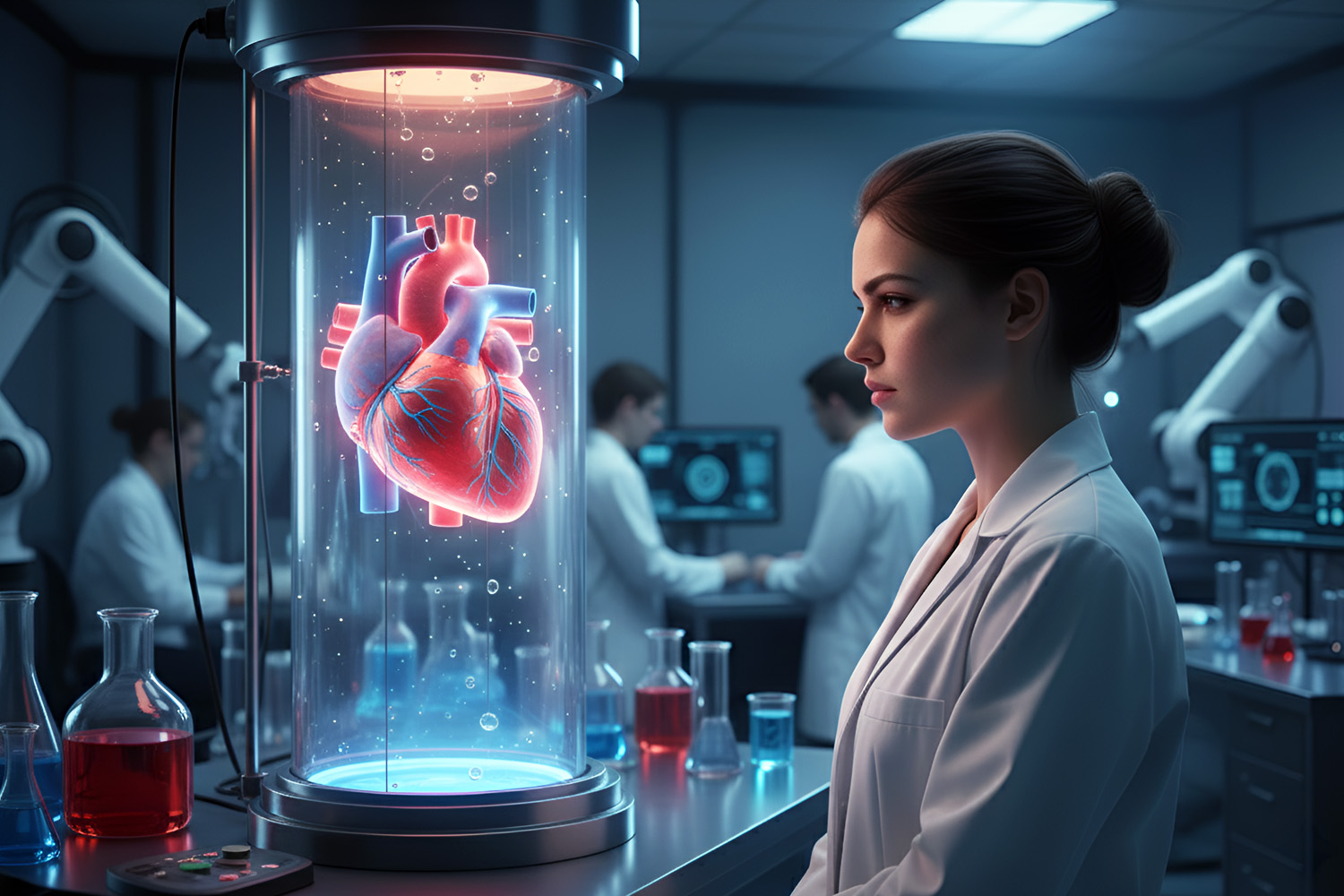
Bioreactors provide controlled environments where cells can grow and organize into tissues. They simulate conditions like temperature, oxygen levels, and nutrient flow.
3. 3D Bioprinting Techniques
Modern research uses highly precise printers to position living cells layer-by-layer, creating complex structures such as:
- tissue scaffolds
- blood vessel networks
- early organ prototypes
3D bioprinting has already been used experimentally to create simplified versions of skin, cartilage, and vascular tissues.
4. Organ Scaffolds
Another approach involves using a natural or synthetic scaffold. For example, scientists can remove cells from a donor organ-leaving behind its structure-and repopulate it with a patient’s own cells.
Recent Progress in the Field
Although fully transplantable human organs are not yet widely available, several scientifically verified milestones demonstrate meaningful progress:
- Lab-grown skin and cartilage are already used in specific medical treatments.
- Mini-organs, or organoids, have been created for the liver, intestine, kidney, and brain to support research and drug testing.
- Partial organ structures, such as heart tissue patches and airway grafts, have been tested in clinical applications.
- Blood vessel engineering continues to advance, helping support future complex organs.
These achievements show that organ-scale engineering is no longer science fiction-although full organ transplants from lab-grown tissues still require further development and safety validation.
Ethical and Scientific Challenges
Despite rapid innovation, several challenges remain:
- Ensuring long-term organ function
- Creating complete vascular networks for large organs
- Maintaining stable cell types over time
- Navigating regulatory and ethical frameworks
Because of these complexities, experts emphasize careful research, transparent clinical testing, and long-term monitoring before lab-grown organs can become standard medical options.
The Future Outlook
Many scientists believe that regenerative medicine will eventually allow hospitals to grow patient-specific organs for transplant. Early applications may begin with simpler structures-such as skin, heart patches, or airway tissues-while more complex organs like kidneys and livers remain a longer-term goal.
As technological breakthroughs continue, lab-grown organs hold the promise of reshaping how humanity treats organ failure, giving millions of patients new hope for personalized and accessible care.